- Set-up date
- December, 2024
- Aquarium decoration
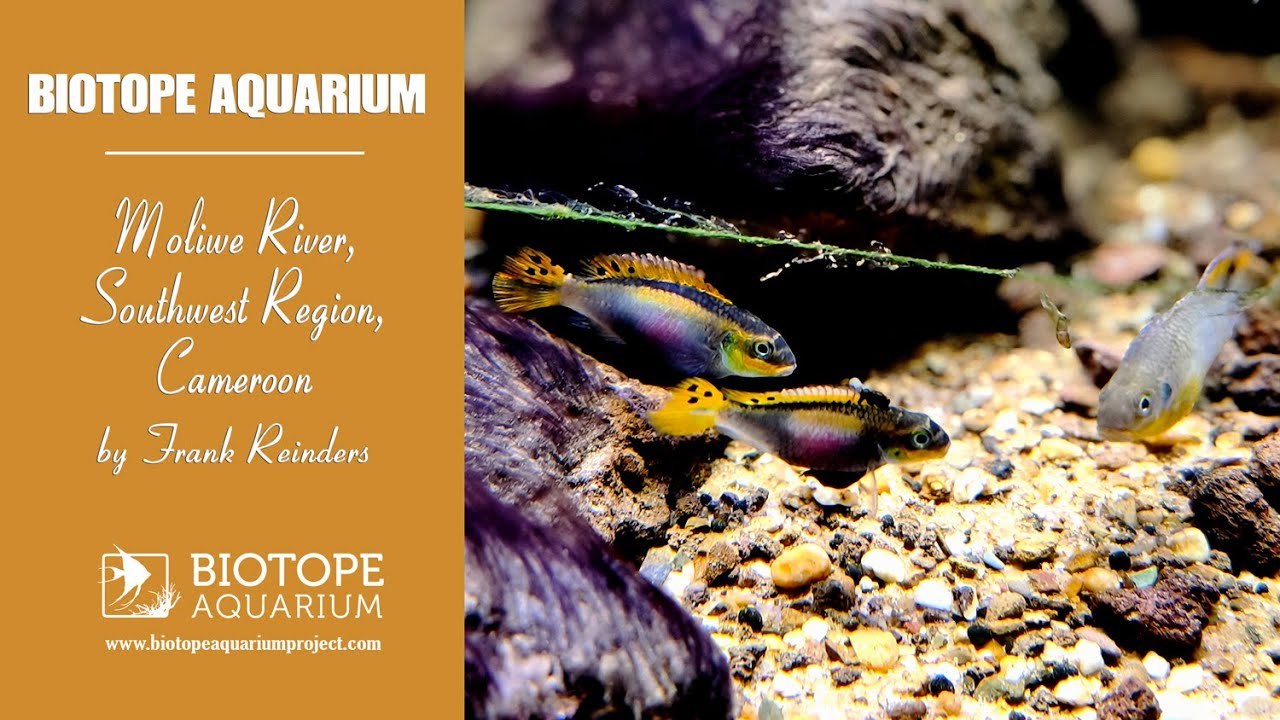
To recreate the riverbank environment of the Moliwe River, I chose lava rock as the primary hardscape material due to its natural appearance, irregular shapes, and porous surface, which promotes the growth of biofilm.
The substrate consists of a mix of sand, gravel, and both fine and coarse lava particles, reflecting the diverse bottom structure found in the natural habitat.
I created a gradual slope in the substrate, rising from about 1 cm in the front to 10 cm in the back, in order to enhance visual depth and mimic sediment displacement by current.
The lava stones are arranged to conceal fixed technical equipment while also forming caves and crevices that serve as hiding and breeding places for the fish.
From the background, root structures extend into the water, simulating the overhanging vegetation of a natural riverbank.
There are no rooted aquatic plants – instead, only natural growth in the form of algae and biofilm is present, as observed in the original biotope.
Driftwood, leaf litter, and soft sediment are nearly absent, in keeping with the fast-flowing and clean nature of the Moliwe River.
- Aquarium equipment
The aquarium has a volume of 312L (130×60×40cm New Wave Concepts) and is equipped to simulate the strong current and clean, well-oxygenated water of the Moliwe River.
- Filtration AquaEl Ultramax 1500: An external canister filter provides mechanical and biological filtration. It ensures clear water and supports stable water parameters.
- Water movement DUPLA Marin Silent Waver 6000: Two additional circulation pumps create a directional, fast-flowing current that mimics the natural flow conditions of the river and prevents sediment buildup.
- Heating AquaEl Flow Heater 300: A heater with thermostat maintains a constant temperature of 26 °C, matching the tropical climate of southwestern Cameroon.
- Lighting GHL MITRAS: LED lighting system with a natural daylight spectrum, set to moderate intensity. Lighting is kept subtle to prevent excessive algae growth while supporting biofilm development.
- Other: All visible technical equipment is hidden behind or between lava rocks to preserve the natural appearance of the biotope layout.
Fish list:
- Pelvicachromis kribensis (Cichlidae)
- Epiplatys infrafasciatus (Nothobranchiidae)
- Fish care
In the aquarium, Epiplatys infrafasciatus are kept and fed a varied diet that includes live, frozen, and dried mosquito larvae, as well as Artemia and flake food.
For Pelvicachromis kribensis, I also provide vegetables such as bell pepper, carrots, and zucchini.
Vitamins and probiotics are added regularly.
The aquarium temperature ranges between 24 and 26°C, with slight day-night fluctuations.
The fish have access to areas with little to no current and plenty of hiding places for retreat. The Epiplatys prefer shaded areas, which makes them rarely visible.
The tank is covered with a lid to prevent the Epiplatys from jumping out.
Occasionally, the fish are fed flies, allowing them to display their natural surface-hunting behavior.
The oxygen level in the aquarium is very high.
- Plant care
- Water care
Every two weeks, I perform a water change of approximately 30% to maintain water quality and stability. The aquarium glass is cleaned occasionally, as needed, to remove algae buildup.
Thanks to the strong and continuous water flow, there is no need to manually clean the substrate. Organic waste is efficiently directed toward the filter inlet by the current.
The external canister filter is partially cleaned every two months. During this process, the biological filter media are gently rinsed with aquarium water to remove accumulated debris while preserving beneficial bacteria colonies.
To further support the health of the biological filter, I regularly add a special bacterial supplement that helps maintain microbial balance and promotes stable water conditions.