bam Beginner-friendly level

#11049 Rio Nanay, Loreto region, Peru

Sponsored by

Peru, Loreto, Iquitos

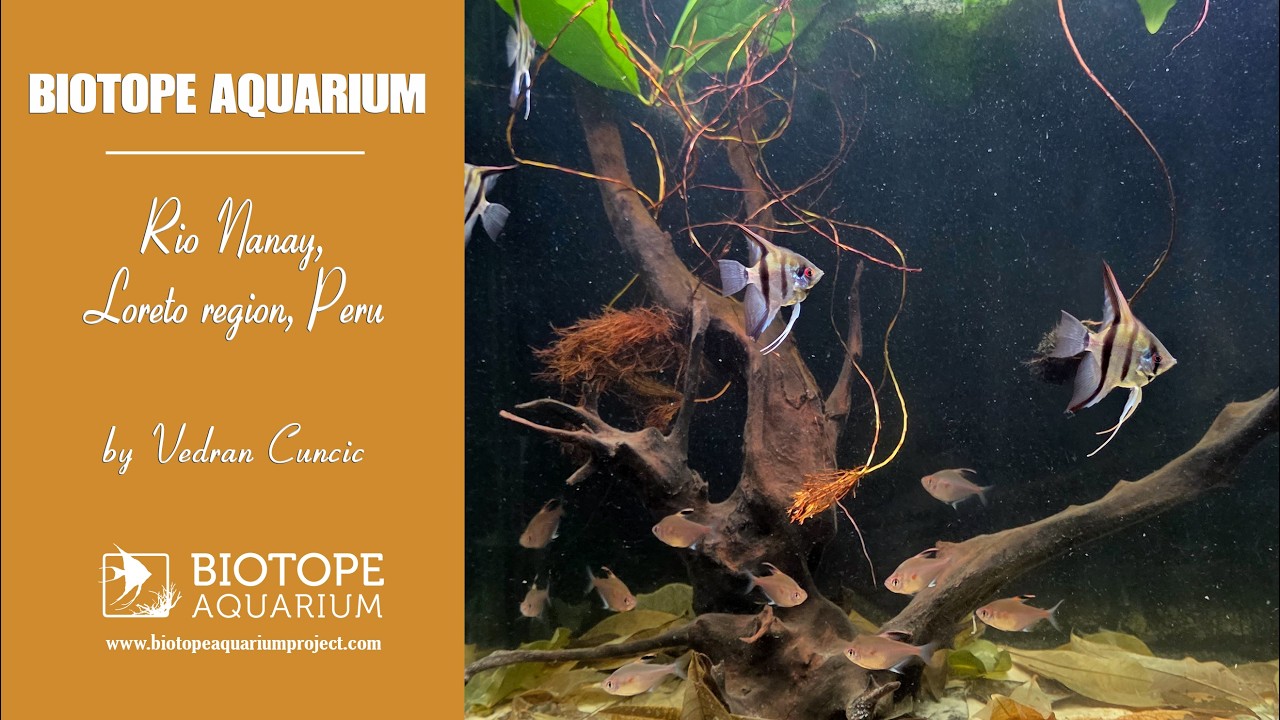
During an expedition to the Loreto region of Peru, I had the opportunity to observe the Río Nanay firsthand – its blackwater, white sandy bottom, and dense tangles of submerged roots and leaf litter. This aquarium is a direct result of that experience. A tall aquarium format was chosen specifically to suit Pterophyllum scalare (Río Nanay strain), a deep-bodied species that requires ample vertical swimming space.

The fish community includes Hyphessobrycon erythrostigma (Bleeding Heart Tetra) as a midwater schooling species, together with Corydoras loretoensis and CW123 (Río Nanay Corydoras) occupying the sandy substrate. The décor consists of driftwood branches, aerial roots of a Ficus tree, small Ficus branches with green leaves, dried tropical leaves, and blackwater extract to replicate the soft, acidic water conditions of the Río Nanay. The aquarium remains faithful to the natural biotope where the fish were collected.

Submitted by
Vedran Cuncic
GPS
-3.8549149, -73.4607925
Geographical region
South America
Drainage Basin
Amazon
River catchment
Upper Amazon
Water body type
River
Water body name
Rio Nanay
Water body part
Channel
Water body course
Lower course
Water body: tributary of
River
Tributary name
Amazon

Warning: Undefined variable $fish_parent in /home/biotopea/public_html/wp-content/themes/bap/content-bam.php on line 85

Water Chemistry

Water information

Water type
Freshwater
Water color
Black water
Water transparency
Medium
Concentration of sediments
Low
Water temperature
28-32 °C
Water flow/curent
Slow

Chemical parameters

pH
6
Conductivity
30
GH
10 mg/l
dGH
KH
5 mg/l
dKH
Dissolved Oxygen
8 %

Aquarium information

Aquarium description

Set-up date
January, 2026
Aquarium decoration

The substrate consists of fine white quartz sand, replicating the sandy riverbed of the Río Nanay. The décor includes a central piece of aged driftwood, aerial roots of Ficus sp., and fresh leafy branches that are replaced periodically after the leaves naturally fall and sink. The wood is complemented by a layer of dried leaves (Ficus, avocado, and other tropical species available locally) covering the substrate, creating natural tannin release and refuge areas for bottom-dwelling fishes.

Aerial roots of Ficus insipida are used to recreate the submerged root structures characteristic of the Río Nanay margins. No artificial plants or rocks are used.

Aquarium equipment

JBL external canister filter with a flow rate appropriate for a slow-moving blackwater river (turnover of 3-4× the aquarium volume per hour). JBL 300W heater set to 28°C. Subdued LED lighting replicates the low-light conditions of the tannin-stained Río Nanay. Peat filtration media are used to further soften and acidify the water.

Fish care

The fish are fed a varied diet of live and frozen foods, including bloodworms and Artemia, reflecting the natural carnivorous/omnivorous feeding habits of the species. Pterophyllum are additionally offered high-quality cichlid pellets. Feeding is performed once or twice daily in small portions. All fish are observed regularly for health and natural behaviour.

Plant care

No plants.

Water care

Weekly water changes of 25% are performed using a mixture of tap water and RO water to maintain soft, slightly acidic conditions. Blackwater extract (tannins) is added after each water change. Dried leaves are replaced as they decompose. pH, conductivity, and temperature are monitored weekly. The filter is cleaned monthly to preserve biological filtration.

Dimensions

Length
70 cm
Depth
45 cm
High
70 cm
Volume
220 L

Substrate in aquarium

Sand
Beige
Pebble/Gravel
None
Stone
None
Stone form
Silt/Mud
None
Leaves
Many
Driftwood
Few
Submerged terrestrial vegetation
Yes