bin
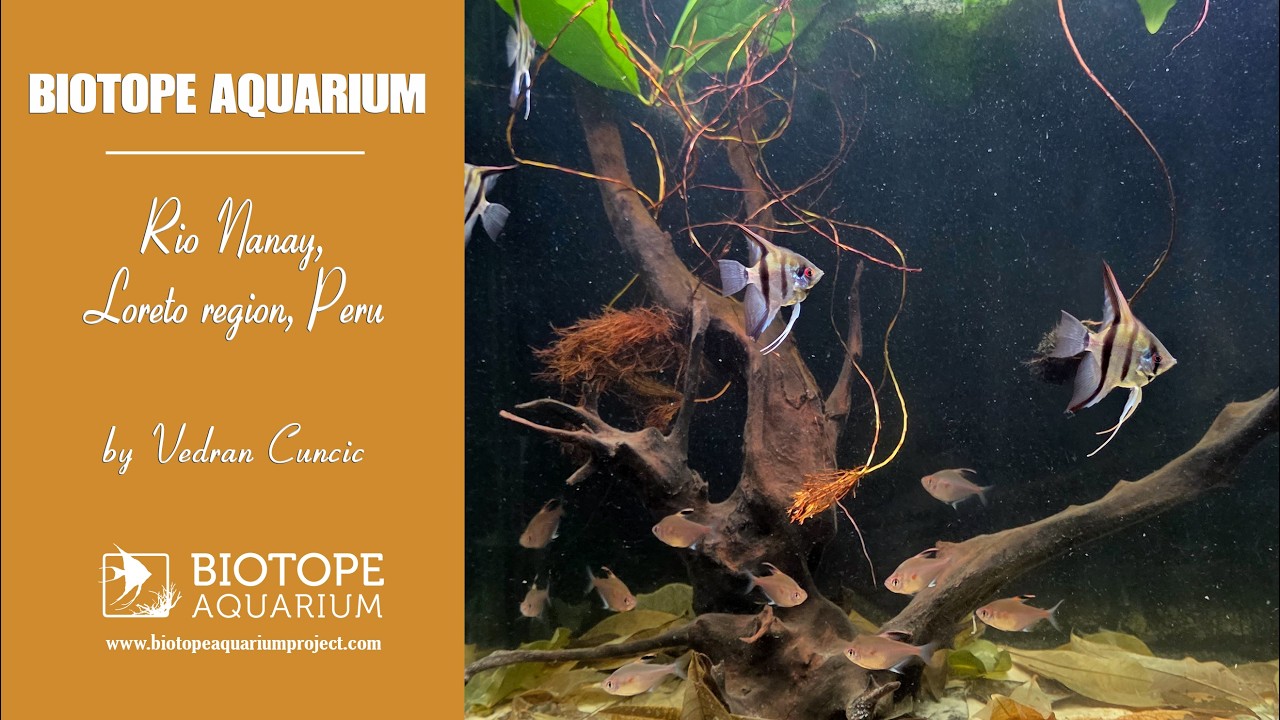
Rio Nanay, Loreto region, Peru
Peru, Loreto, Iquitos
The Rio Nanay is a 315 km long blackwater tributary of the Amazon River in the Loreto region of northeastern Peru, near the city of Iquitos – the largest city in the world inaccessible by road. As documented during the JBL Peru Expedition, the river is slow-flowing and characterized by tea-colored, tannin-rich water with temperatures ranging from 28-32°C, a pH of 5.0-6.0, and an exceptionally low conductivity of 4-7 µS/cm.
The riverbed consists of fine beige-white sand with no rocky substrate. It is scattered with leaf litter, submerged branches, and fallen tree trunks that provide essential shelter and breeding sites for numerous ornamental fish species. During the rainy season, the Rio Nanay floods the surrounding rainforest, creating extensive seasonally inundated habitats that increase food availability and ecological complexity.
Characteristic fish species include Pterophyllum scalare (Rio Nanay population), Apistogramma allpahuayo, Pristella maxillaris, Carnegiella strigata, and Symphysodon aequifasciatus. Aquatic vegetation is limited to floating plants such as Pistia stratiotes and Lemna minor, while submerged aquatic plants are typically absent due to the acidic blackwater conditions and limited light penetration.
A significant portion of the Rio Nanay flows through the protected Allpahuayo-Mishana National Reserve, an area recognized for its exceptional biodiversity and numerous endemic species.
- Submitted by
- Vedran Cuncic
- Approved by
- Roberto E. Reis, Pablo C. Lehmann & Antonio Machado-Allison
- GPS
- -3.8549149, -73.4607925
- Geographical region
- South America
- Drainage Basin
- Amazon
- River catchment
- Upper Amazon
- Water body type
- River
- Water body name
- Rio Nanay
- Water body part
- Channel
- Water body course
- Lower course
- Water body: tributary of
- River
- Tributary name
- Amazon
Videos above and below water
Warning: Undefined variable $fish_parent in /home/biotopea/public_html/wp-content/themes/bap/content-bin.php on line 55
Water Chemistry
Water information
- Water type
- Freshwater
- Water color
- Black water
- Water transparency
- Low
- Concentration of sediments
- Medium
- Water temperature
- 28 °C
- Water flow/curent
- Slow
Chemical parameters
- pH
- 5
- Conductivity
- 6
- GH
- 3 mg/l
- dGH
- KH
- 1 mg/l
- dKH
- Dissolved Oxygen
- 3 %
Substrate in nature
- Sand
- Beige
- Pebble/Gravel
- None
- Stone
- None
- Stone form
- Silt/Mud
- Beige
- Leaves
- Adundant
- Driftwood
- Many
- Submerged terrestrial vegetation
- None
Aquatic Biotope
- Date of collecting
- 11/09/2025
- Collecting area
- River bank
- Water depth
- 0,5m
- Air temperature
- 30 °C
- Sunlight
- Full sun
Environment
- Environment
- Affected by human activity
- Affected by human activity
- Pollution
- Pollution
- Little
- Surrounding area
The Rio Nanay flows through the lowland Amazon rainforest of the Loreto region in northeastern Peru. This slow-flowing blackwater river meanders through dense tropical forest, forming marshes, oxbow lakes, and seasonally flooded wetlands. Its banks are lined with characteristic Amazonian trees, including ceticos (Cecropia spp.), cataguas (Hura crepitans), and chontas (Bactris spp.). During the rainy season, the river overflows its banks, inundating the surrounding forest and creating extensive floodplain habitats that support a rich diversity of aquatic life.
A significant stretch of the Rio Nanay passes through the Allpahuayo-Mishana National Reserve, one of the most biodiverse protected areas in the Peruvian Amazon, renowned for its high level of endemism. The river lies just 3.5 km from Iquitos, the largest city in the world inaccessible by road.
- Underwater landscape
The underwater landscape of the Rio Nanay is characterized by a fine white sandy substrate devoid of rocks. The riverbed is blanketed with leaf litter, primarily composed of fallen leaves from riparian trees, interspersed with submerged branches, roots, and fallen trunks deposited during seasonal flooding. These natural structures provide essential shelter, spawning sites, and feeding areas for a wide variety of aquatic species.
Aquatic vegetation is scarce and limited to floating plants such as Pistia stratiotes and Lemna minor, while submerged aquatic plants are typically absent. The water is darkly stained by dissolved tannins, producing the characteristic blackwater appearance. Combined with its medium transparency, acidic chemistry, and exceptionally low conductivity, this creates a dimly lit underwater environment typical of Amazonian blackwater ecosystems.
- Threats to ecology
The Rio Nanay biotope faces several significant threats, primarily deforestation, water pollution, and unsustainable collection of ornamental fish. Illegal logging within the watershed reduces riparian forest cover, destabilizes riverbanks, and diminishes the input of leaf litter and woody debris that are essential components of this blackwater ecosystem. Agricultural runoff and untreated wastewater from the expanding city of Iquitos can alter the river’s ultra-soft, acidic water chemistry, threatening species adapted to these highly specialized conditions.
The collection of ornamental fish, including Pterophyllum scalare (Rio Nanay population) and Apistogramma allpahuayo, may also impact wild populations if harvesting is not sustainably managed. Protecting the surrounding rainforest, maintaining water quality, and promoting responsible, regulated collection practices are essential for conserving the unique biodiversity of the Rio Nanay.