bam Demanding level

#11104 Igarape tributary of the Rio Siapa, Venezuela

Sponsored by

Venezuela, Bolivarian Republic of, Amazonas

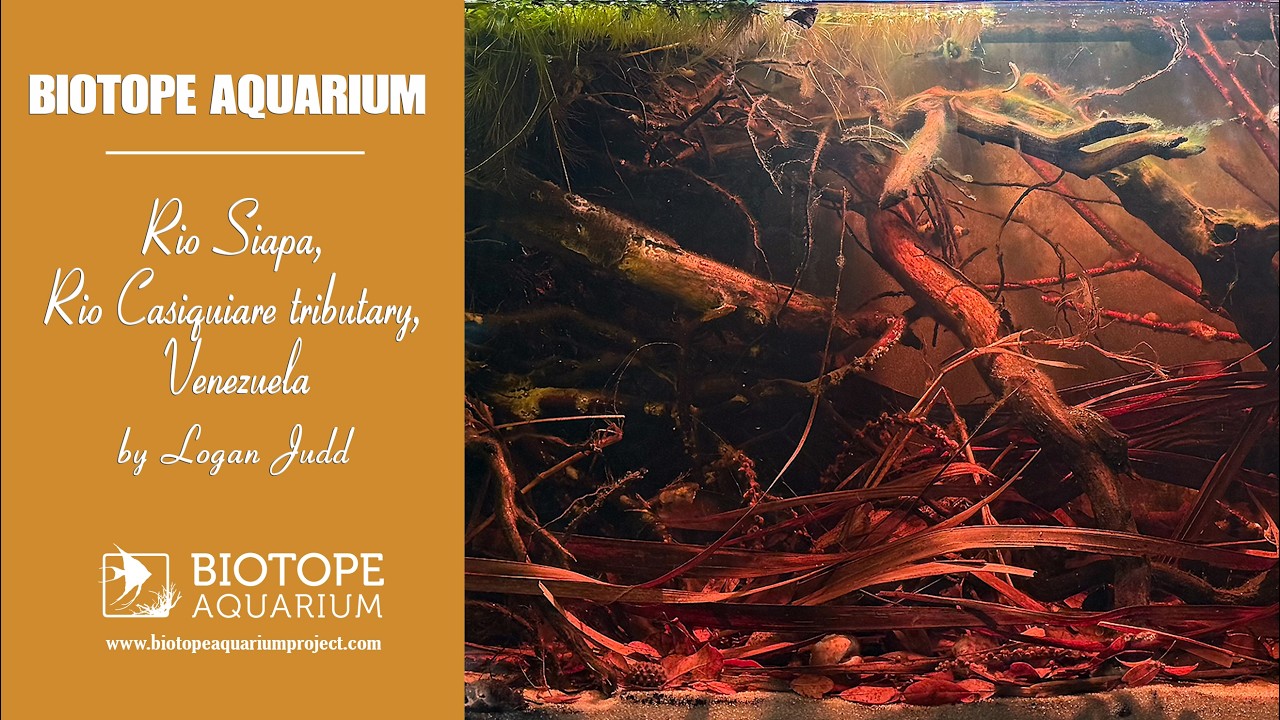
The aim of this 284-liter aquarium is to replicate a tributary of the Siapa River, itself a tributary of the larger Casiquiare Canal, which connects the Amazon and Orinoco river basins and acts as a dispersal corridor for fish and other aquatic life between these systems.

The specific habitat simulated is the tangled bank of a slow-flowing forest stream near its confluence with the Siapa River. Overhead vegetation provides partial shade, while the slow current and complex structure allow the accumulation of leaves and branches. One side of the aquarium represents the riverbank itself, from which fine roots, large branches, and living roots from riparian vegetation extend into the water.

Beyond this area, sufficient light penetrates the canopy to allow limited aquatic plant growth among the leaf litter. Together, these structural elements create a diverse and complex environment where the inhabitants can display a wide range of natural behaviours.

Submitted by
Logan Judd
Geographical region
South America
Drainage Basin
Amazon basin
River catchment
Amazon
Water body type
Igarapè
Water body name
Siapa river
Water body part
Channel
Water body course
Lower course
Water body: tributary of
Igarapè
Tributary name
Siapa River

Videos above and below water

Warning: Undefined variable $fish_parent in /home/biotopea/public_html/wp-content/themes/bap/content-bam.php on line 85

Water Chemistry

Water information

Water type
Freshwater
Water color
Black water
Water transparency
High
Concentration of sediments
Water temperature
26 °C
Water flow/curent
Slow

Chemical parameters

pH
6.3
Conductivity
GH
dGH
KH
dKH
Dissolved Oxygen

Aquarium information

Aquarium description

Set-up date
May, 2026
Aquarium decoration
The aquarium bank structure was created using pond planter pots and fish-safe expanding foam, providing a foundation for a tree trunk that forms the core of the root mass. Additional branches and roots were added to expand the structure and replicate an undercut riverbank with exposed riparian root systems. The bank itself is hollow, and the planter pot mesh allows continuous water exchange while preventing aquarium inhabitants from entering the structure.

A variety of terrestrial plants were planted within the bank. White pool filter sand was used as the substrate and gently sloped toward the rear of the aquarium to increase the perception of depth. Additional driftwood branches were positioned to increase habitat complexity. A large quantity of botanicals and leaf litter was added gradually in manageable batches to create a deep, layered organic substrate similar to the accumulation found in natural forest streams.

The completed layout creates a highly complex environment with numerous areas for fish to explore, forage, and seek shelter.

Fish:

  • Nannostomus eques (Lebiasinidae) – 10
  • Nannostomus marginatus (Lebiasinidae) – 10
  • Carnegiella strigata (Gasteropelecidae) – 7
  • Apistogramma uaupesi (Cichlidae) – 3
  • Poecilocharax weitzmani (Crenuchidae) – 12
  • Paracheirodon axelrodi (Acestrorhamphidae) – 7
  • Copella nattereri (Lebiasinidae) – 3

Aquatic plants:

  • Mayaca fluviatilis (Mayacaceae)
  • Echinodorus horizontalis (Alismataceae)
  • Salvinia minima (Salviniaceae)
  • Hydrocharis laevigata (Hydrocharitaceae)
Aquarium equipment

Filtration: Fluval FX2 canister filter equipped with alternating layers of coarse filter sponge and biological filter media. A small sponge filter is also used to provide additional aeration and maintain oxygen levels. The heater is controlled through an INKBIRD temperature controller to maintain a stable temperature range and provide alerts in case of heater failure.

Fish care

The fish are fed a varied diet of high-quality prepared and frozen foods, as well as a wide range of live foods including daphnia, grindal worms, mosquito larvae, bloodworms, amphipods, fruit flies, and fruit fly larvae. This diversity ensures proper nutrition while allowing the fish to display a variety of natural foraging behaviours.

The abundant habitat structure provides numerous areas for shelter and exploration. A lid is kept on the aquarium to protect more active and jump-prone species. Water temperature is maintained at an average of 26°C. The filter outflow is directed in two separate directions to maximize overall water circulation while minimizing excessive current strength.

Plant care

Both submerged and floating plants require minimal maintenance aside from adequate lighting and a bi-weekly dose of fertilizer. Occasional removal of excess floating plants helps maintain balance within the system.

Water care

A 20% water change is performed weekly using RO water remineralized with Brightwell Aquatics Remineraliz-P to achieve the desired water parameters. Monthly, the filter media are removed and rinsed in the removed aquarium water to clear accumulated debris while preserving beneficial microbial populations.

Dimensions

Length
122 cm
Depth
45 cm
High
53 cm
Volume
280 L

Substrate in aquarium

Sand
White
Pebble/Gravel
None
Stone
None
Stone form
Silt/Mud
None
Leaves
Adundant
Driftwood
Many
Submerged terrestrial vegetation
None

Bibliography