bam Demanding level

Rocky canals, Palude del Capitano, Puglia, Italy

Sponsored by

Italy, Apulia, Nardò municipality, Province o Lecce

The aquarium is a replica of a section of the aquatic site. A portion of the vertical limestone wall as found in several areas of the pool is highlighted. These vertical cuts in the rock are particularly evident near the submerged channels connecting the pool to the sea.

The seabed consists of fine white sand as present in the natural site. Limestone rocks, driftwoods and roots of semi-aquatic plants are also part of the site’s submerged landscape. On these substrates are sessile invertebrates such as the hydrozoan Cordilophora caspia and numerous vagile invertebrates such as Gammarus aequicauda, small gastropod molluscs such as Theodoxus fluviatilis and decapod crustaceans of the genus Palaemonetes.

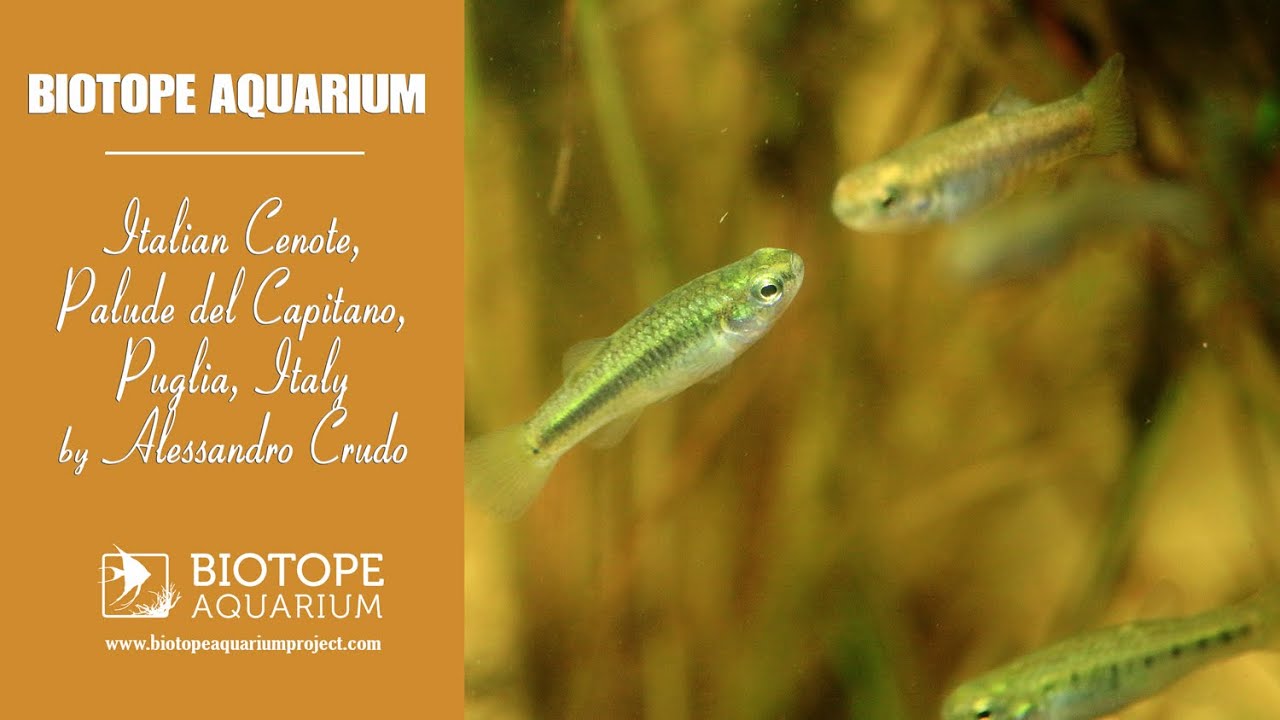
A population of Aphanius almiriensis lives among the fractures in the rocks and aquatic roots. This fish species is currently only reported in Italy at this site. Other euryhaline fish species such as Atherina boyeri and Liza ramada, on the other hand, occupy the open water of the lagoon and are more widely distributed across Mediterranean brackish and coastal environments. These species tend to tolerate a broader range of salinity and temperature fluctuations, giving them a competitive advantage in less stable habitats.

In contrast, Aphanius almiriensis exhibits a more specialized habitat preference, often associated with microhabitats that provide shelter from predators and stable environmental conditions. This ecological specialization may contribute to its limited distribution and heightened vulnerability to habitat alterations.

Conservation efforts for Aphanius almiriensis should therefore prioritize the protection of its specific habitat features, including submerged vegetation, rocky crevices, and the overall water quality of the lagoon system.

Submitted by
Alessandro Crudo
Approved by
Francesco Denitto & Aleksey Malyshev
GPS
40.2041855, 17.9258003
Geographical region
Southern Europe
Drainage Basin
Ionian coast of Puglia Region
River catchment
Water body type
Pool
Water body name
Palude del Capitano
Water body part
Pool
Water body course
Water body: tributary of
Channel
Tributary name

Videos above and below water

Warning: Undefined variable $fish_parent in /home/biotopea/public_html/wp-content/themes/bap/content-bam.php on line 85

Warning: Undefined array key "additional_species" in /home/biotopea/public_html/wp-content/themes/bap/functions/bap-fields.php on line 349

Water Chemistry

Water information

Water type
brackish-water
Water color
Clear water
Water transparency
High
Concentration of sediments
Medium
Water temperature
19 °C
Water flow/curent
None

Chemical parameters

pH
7.4
Conductivity
9800
GH
430 mg/l
dGH
KH
273 mg/l
dKH
Dissolved Oxygen

Aquarium information

Aquarium description

Set-up date
August 2024
Aquarium decoration

The aquarium is a replica of a section of the aquatic site. A portion of the vertical limestone wall as found in several areas of the pool is highlighted. These vertical cuts in the rock are particularly evident near the submerged channels connecting the pool to the sea.

The seabed consists of fine white sand as present in the natural site. Limestone rocks, driftwoods and roots of semi-aquatic plants are also part of the site’s submerged landscape.

On these substrates are sessile invertebrates such as the hydrozoan Cordylophora caspia and numerous vagile invertebrates such as Gammarus aequicauda, small gastropod molluscs such as Theodoxus fluviatilis and decapod crustaceans of the genus Palaemonetes.

A population of Aphanius almiriensis lives among the fractures in the rocks and aquatic roots. This fish species is currently only reported in Italy at this site. Other euryhaline fish species such as Atherina boyeri and Liza ramada, on the other hand, occupy the open water of the pool.

Aquarium equipment
  • The transversal rock wall hides an internal biological filter with only “Siporax”.
  • A “Sicce Syncra nano 430” pump set to minimum flow is directed on the rear wall of the aquarium to avoid creating turbulence in the tank.
  • An aerator behind the rock wall simulates the ascending currents of the natural environment creating only surface turbulence.
  • Lighting is provided by a “SANSI” LED 36W, 6000K for 9 hours a day.
Fish care

The presence of some colonies of Cordylophora caspia and other crustaceans requires a controlled feeding to avoid minimal contamination of water.

I provide feeding every other day of dry food based on vegetables and live feeding every three days with nauplii of Brine shrimps and Daphnia sp. and live or freeze-dried Chironomus.

Fish list:

  • Aphanius Almiriensis (Aphaniidae)

Crustacean list:

  • Gammarus aequicauda (Gammaridae)
  • Palaemon adspersus (Palaemonidae)

Mollusc list:

  • Theodoxus fluviatilis (Neritidae)
  • Cordylophora caspia (Cordylophoridae)
Plant care

Stuckenia pectinata in addition to the natural mineralization of the sediments is Fertilized with “SERA Pond Plant Booster” under the rock slabs.
I do not add any fertilization for semi-submerged plants Samolus valerandi and Juncus maritimus.

Aquatic plant list:

  • Stuckenia pectinata (Potamogetonaceae)

Wtland plant list:

  • Juncus maritimus (Juncaceae)
  • Samolus valerandi (Primulaceae)
Water care
  • Water change every 2 weeks diluting the sea water 1:5.
  • Maintenance of the tank without siphoning the bottom.
  • Only removal of excess plant residues.

Dimensions

Length
100 cm
Depth
30 cm
High
40 cm
Volume
110 L

Substrate in aquarium

Sand
White
Pebble/Gravel
White
Stone
White
Stone form
Flat
Silt/Mud
Reddish
Leaves
None
Driftwood
None
Submerged terrestrial vegetation
Yes

Bibliography

Comment by the expert

Francesco Denitto: The layout created by the participant is impressive and very faithful to the natural environment. Both the invertebrates and fish introduced into the tank are well balanced, can coexist for a long time and integrate perfectly with the decorations used by the author to create the biotope aquarium.

Aleksey Malyshev: There was a detailed description of how both fish and invertebrates live in this aquarium, which is quite rare. I’ve always appreciated when a biotope aquarium includes not only fish but also invertebrates. And if you have a community that has been thriving for a year, that truly earns my respect.