- Set-up date
- August, 2025
- Aquarium decoration
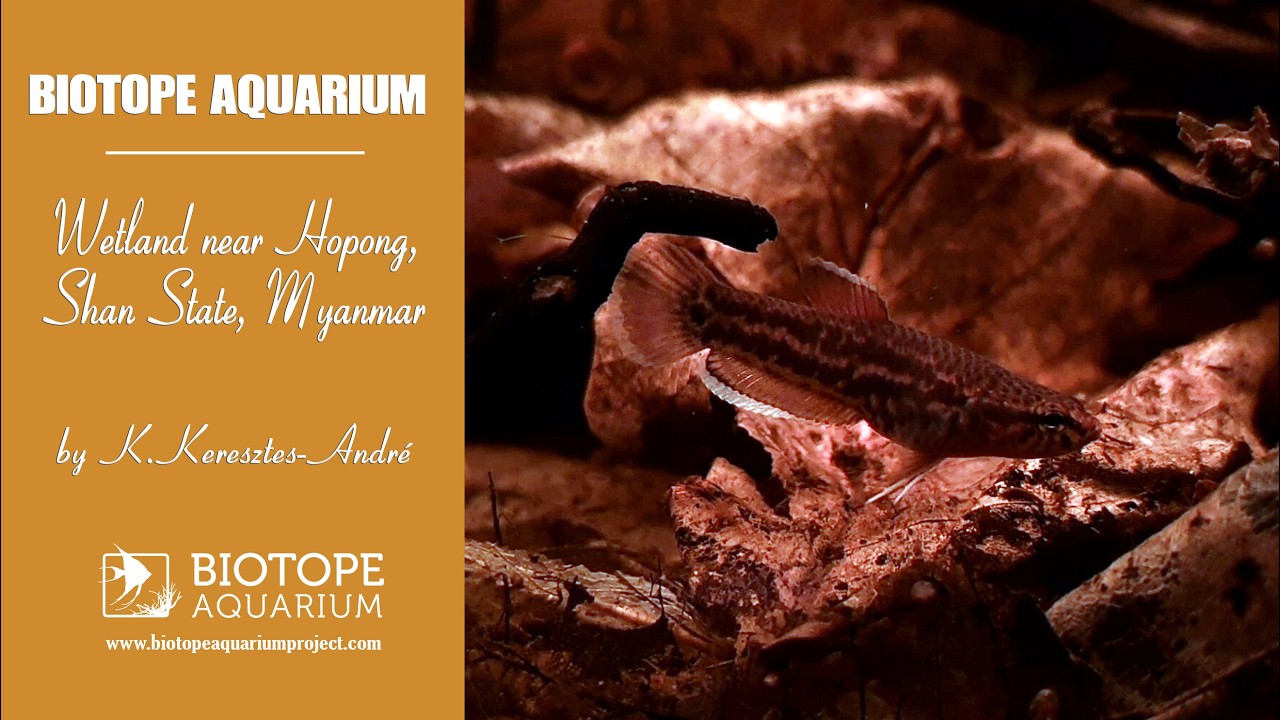
Since the natural habitat of Betta albimarginata consists mainly of dark, slow-flowing, swampy waters, I aimed to recreate these conditions in my aquarium. The substrate is composed primarily of peat and leaf litter, creating a high concentration of organic matter and relatively low oxygen levels, similar to its natural environment.
Although Betta albimarginata is adapted to these challenging conditions, the aquarium was operated without fish for almost four months to allow the biological balance to establish and the ecosystem to mature properly.
For decoration, I mainly used thin roots and branches, which provide natural structures and suitable hiding places for these shy fish. The main aquatic plant is Microsorum pteropus, a species that naturally grows attached to stones, fallen trees, and submerged roots. During the rainy season, rising water levels submerge these plants in their natural habitat.
I used Salvinia cucullata as a floating plant to create additional shade and help absorb excess nutrients resulting from the high organic load. Its extensive root system also proved to be an excellent refuge for newly hatched fry.
Fish:
- Betta albimarginata (Osphronemidae)
- Boraras brigittae (Cyprinidae)
Aquatic plants:
- Microsorum pteropus (Polypodiaceae)
- Salvinia cucullata (Salviniaceae)
- Aquarium equipment
Filtration: Sera Air 110 air pump with sponge filter
Lighting: Aqua Week M-Series 450 K-Pro APP Control RGB+UV LED light
- Fish care
Since my chosen species was Betta albimarginata, a fish that requires careful attention and specific conditions, I aimed to recreate its natural environment as accurately as possible.
This species requires soft, acidic water. Although it can tolerate slightly harder conditions, successful breeding generally occurs only in very soft water. To achieve suitable parameters, I used rainwater to fill the aquarium.
These shy fish rarely display themselves under normal circumstances, but by providing plenty of natural hiding places, it is sometimes possible to observe them, especially around feeding areas.
To maintain their health and condition, I feed them exclusively with live foods, such as tubifex worms, earthworms, and mosquito larvae. The water temperature is allowed to fluctuate by a few degrees, helping to stimulate natural seasonal variations and encouraging the fish’s natural resilience.
- Plant care
Due to the decomposition of leaves and roots, the water contains a high level of dissolved organic matter, which provides a continuous source of nutrients for the plants.
While Microsorum pteropus has relatively low nutrient requirements due to its slow growth rate, Salvinia cucullata is a fast-growing floating plant that absorbs significant amounts of nutrients directly from the water column. To support healthy growth and nutrient uptake, adequate lighting is essential.
- Water care
Since this aquarium recreates a very specific habitat, I adapted the maintenance routine accordingly. In nature, the alternation between rainy and dry seasons strongly influences oxygen levels and the concentration of organic matter in the water, so I adjusted my maintenance practices to reflect these natural cycles.
Water changes are performed using collected rainwater, which is tested beforehand to ensure that it has suitable parameters. I usually carry out water changes during periods of rainfall when fresh rainwater is available; however, if I am unable to collect enough rainwater for an extended period, I use RO water instead.
Approximately 50% of the aquarium water is replaced during each maintenance session. Decomposed leaves are continuously replenished to maintain the natural accumulation of organic material, while Salvinia cucullata is regularly thinned to prevent excessive growth and maintain a balanced level of surface coverage.