bam Demanding level

Shallow Backwater Pool, Río San José, Horquetas, Costa Rica

Sponsored by

Costa Rica, Heredia, Sarapiquí

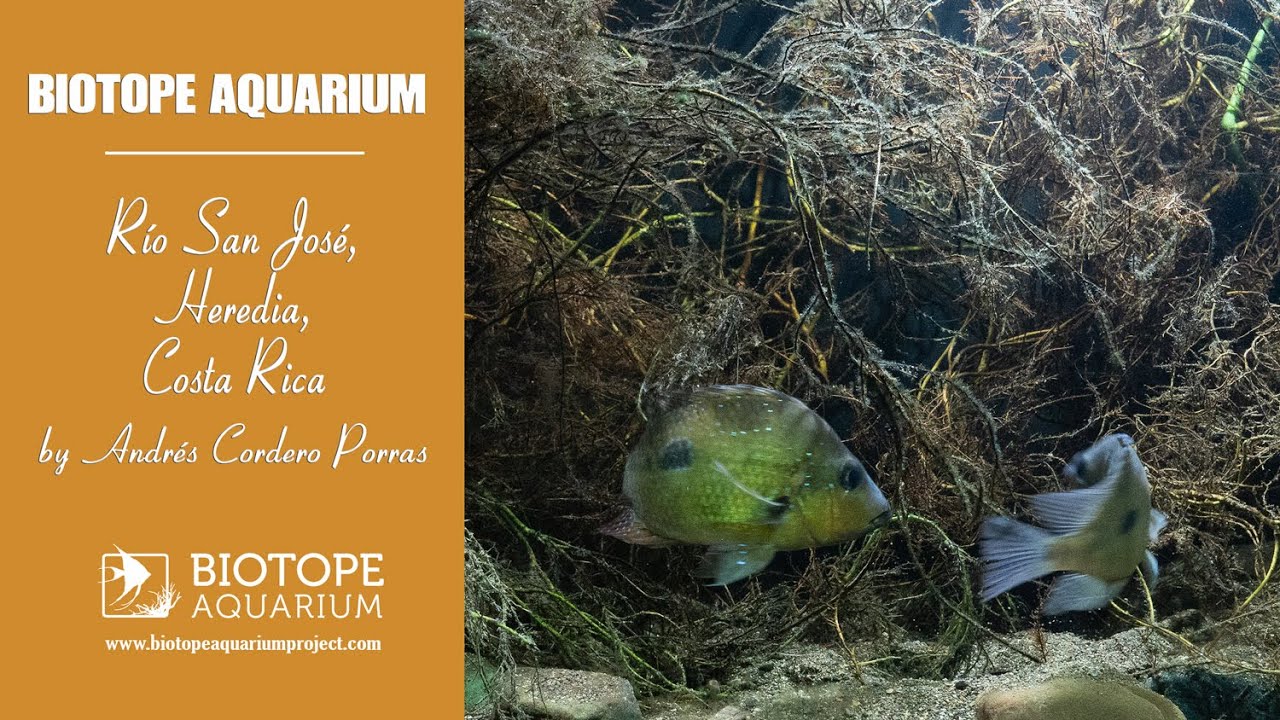
This biotope highlights the role of Zygia longifolia roots in shaping habitat complexity. In a 420L aquarium, dim lighting mimics sunlight filtered through the forest canopy, casting soft beams on sandy substrate. Hollow root structures dominate the layout, providing shaded refuges for shy fish.

Surface and midwater species like Poecilia gillii swim freely, feeding on algae growing along exposed roots, while more timid species remain hidden. This natural behavior is evident in Cribroheros rostratus, which, both in the wild and in the aquarium, cautiously emerge from the shadows under the roots. Initially unseen, they gradually appear and exhibit earth-eating behavior, rhythmically sifting sand in search of food. This setup replicates not only the physical structure of the Río San José backwater but also its behavioral dynamics, offering a living, interactive ecosystem that rewards patient observation with an authentic glimpse into freshwater fish ecology.

Submitted by
Andrés Cordero Porras
Approved by
Michael Köck, Jairo Arroyave & Juan M. Artigas Azas
GPS
10.3478279, -83.8901825
Geographical region
Central America
Drainage Basin
Sarapiquí
River catchment
Río Sarapiqui
Water body type
River
Water body name
Río San José
Water body part
Pool
Water body course
Lower course
Water body: tributary of
River
Tributary name
Río Sarapiqui

Videos above and below water


Warning: Undefined variable $fish_parent in /home/biotopea/public_html/wp-content/themes/bap/content-bam.php on line 85

Warning: Undefined array key "additional_species" in /home/biotopea/public_html/wp-content/themes/bap/functions/bap-fields.php on line 349

Water Chemistry

Water information

Water type
fresh-water
Water color
Clear water
Water transparency
High
Concentration of sediments
Medium
Water temperature
25 °C
Water flow/curent
Slow

Chemical parameters

pH
7
Conductivity
70
GH
20 mg/l
dGH
KH
55 mg/l
dKH
Dissolved Oxygen
90 %

Aquarium information

Aquarium description

Set-up date
February, 2025
Aquarium decoration

The aquarium’s decoration was carefully designed to authentically replicate the natural environment of the San José River’s side arm. A warm, brown-colored sand was selected for the entire substrate, representing the soft riverbed found in this habitat. Along the edges, rounded stones were arranged to recreate the feeling of a gently sloping riverbank. Towering above these, intricate root structures extend across the aquarium, faithfully mimicking the characteristic roots of the Sotacaballo tree (Zygia longifolia).

Over time, these roots have naturally become covered with algae, a result of the carefully controlled photoperiod provided by Kessil lighting and the natural sunlight that streams through a nearby window. Watching the light beams penetrate the water, just as they would through the forest canopy, creates a mesmerizing play of shadows and bright spots, bringing the scene to life.

To further enhance the authenticity, I regularly add botanicals during each maintenance session – small branches, fragments of driftwood, and dried leaves. These elements slowly decompose, releasing tannins and forming biofilm and detritus over the roots, just as they would in the wild. This creates not only a visually accurate environment but also a functional habitat that supports the natural behaviors of the fish.

The substrate itself is deliberately kept imperfect. Rather than maintaining a pristine, flat sandbed, small stones, twigs, and scattered leaves are left in place to simulate the complex textures of a real riverbed. This adds depth and realism to the scene, making every corner of the aquarium feel alive and dynamic.

Observing the fish in this setup reveals fascinating natural behaviors. Some species confidently swim near the surface and in open areas, feeding on the algae and microorganisms growing on the roots. Others, more cautious, remain hidden in the dark hollows beneath the roots. Over time, a beautiful interaction unfolds – bolder fish seem to reassure the shy ones, encouraging them to leave the safety of their shelters and venture out into the filtered light.

It’s captivating to watch as the community finds balance, with each species playing its role. This dynamic interplay, the contrast between light and shadow, and the movement between hiding and exploring perfectly capture the essence of the natural biotope. Standing in front of the aquarium, you don’t just see an aquarium – you feel transported to that quiet, hidden corner of the San José River.

Aquarium equipment

The aquarium uses a sump filtration system with three compartments: the first contains filter pads and sponges; the second holds biological media; and the third houses the Eheim Jäger 300W heater and the return pump. The system is supported by a return pump Jebao DCP-3500 liters and two Kessil A360X lamps for lighting.

Fish care

Fish care in this biotope centers on replicating natural feeding behaviors and ensuring all species receive adequate nutrition. Poecilia gillii are active swimmers that occupy surface and midwater zones, so they are offered floating or slow-sinking pellets, which allow them to feed comfortably in their preferred areas.

Immediately afterward, Cribroheros rostratus are fed sinking pellets and frozen foods. Despite their larger size, these cichlids are notably timid and exhibit distinct substrate-sifting (“earth-eater”) behavior. They prefer to feed near the bottom, methodically filtering sand and detritus in search of food. To accommodate this, fast-sinking foods are provided to ensure they reach the substrate before being intercepted by the quicker poeciliids.

The aquarium layout supports this behavior by maintaining open sandy areas beneath the root structures. These hollows act as visual barriers and refuges while allowing Cribroheros rostratus full access to the bottom, where they can forage naturally. This thoughtful feeding strategy and habitat design allow both surface-active species and shy bottom-dwellers to coexist peacefully, without competition or stress.

Fish list:

  • Criboheros rostratus (Cichlidae)
  • Alfaro cultratus (Poeciliidae)
  • Poecilia gillii (Poeciliidae)
Plant care
Water care

Water care in this biotope aquarium focuses on maintaining stable conditions that replicate the natural environment while ensuring the health of the fish and plants. The primary routine involves performing weekly water changes to remove accumulated waste and replenish essential minerals. Additionally, due to the high water temperatures that promote significant evaporation, it is important to regularly top off the tank with dechlorinated or conditioned freshwater to maintain stable water levels and prevent fluctuations in water chemistry.

Regular inspection and maintenance of the sump system are also essential. The mechanical filtration compartment should be cleaned frequently to remove trapped debris, ensuring that water flow remains unobstructed. It is equally important to check that the return pump is functioning properly and that no blockages or airlocks are affecting the circulation.

Dimensions

Length
120 cm
Depth
70 cm
High
50 cm
Volume
420 L

Substrate in aquarium

Sand
Beige
Pebble/Gravel
Mixed
Stone
Grey
Stone form
Flat
Silt/Mud
Beige
Leaves
Few
Driftwood
None
Submerged terrestrial vegetation
None

Bibliography

Comment by the expert

Michael Köck: The habitat has been precisely recreated, with attention paid to the lighting situation as well as other fine details. The selection of fish is well chosen, conveying excitement and variety. Perhaps the visual similarity of the two Poeciliidae species leads to a little confusion, but these are thoughts that, in a product of this quality, are really just nitpicking at the highest level. Where I see room for improvement is in the excitement of the aquarium. Even though the habitat allows little leeway, a little more dynamism in the root system, playing with the depth of the tank, and perhaps bundled light cones would have been possible and would have brought the result very close to 100 points. All in all, a very well-done copy of a habitat that is not very easy to represent. My respect!

Jairo Arroyave: The BAM constitutes a very accurate representation of the BIN, which is the ultimate goal of the project. Overall a very pleasant BAM to admire.

Juan M. Artigas Azas: The aquarium is beautiful, well-described, and inspiring. However, I noticed that despite the sump filtration, the fish in the video appear to be gasping for air, which suggests that additional aeration or oxygenating filtration might be necessary.