bam Beginner-friendly level

#10772 Sungai Kaligesing, Bogowonto River, Central Java, Indonesia

Sponsored by

Indonesia, Central Java, Purworejo

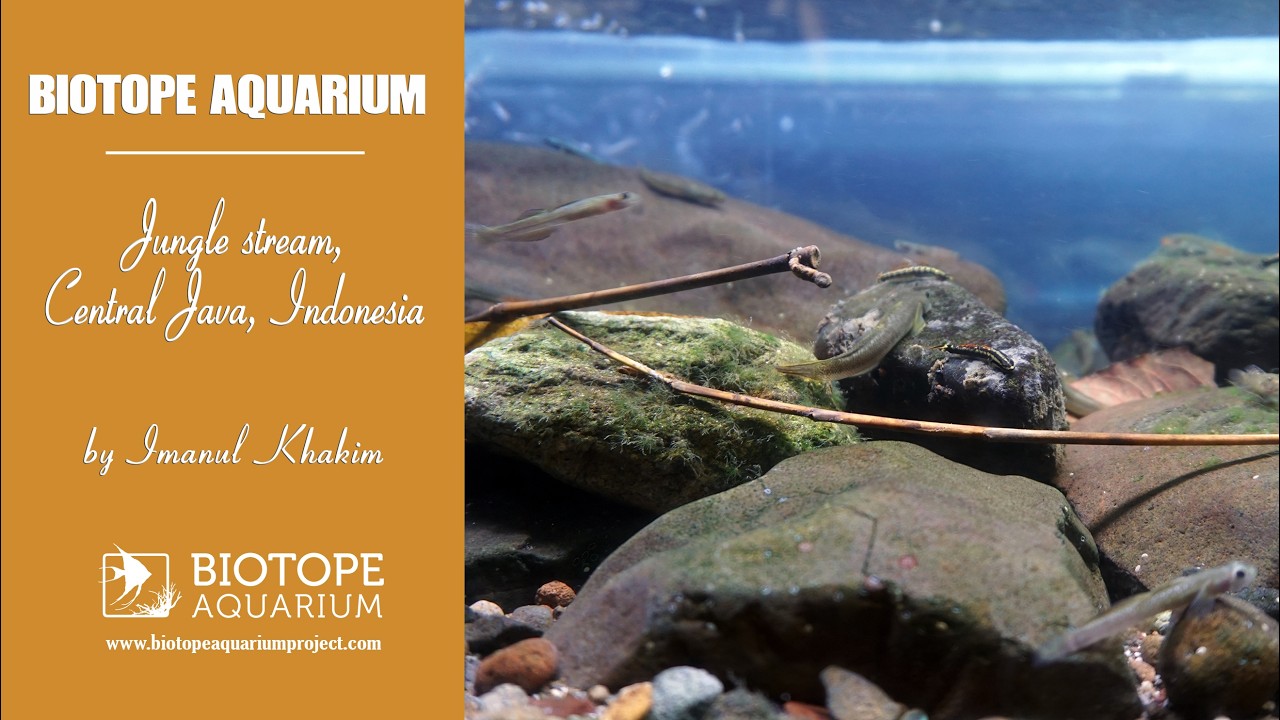
This biotope aquarium was created based on data published by the Indonesian Institute of Sciences (LIPI) in the 2015 study Ichthyofauna of the Menoreh Karst Area, Central Java, and Its Conservation. My goal was to reconstruct the natural habitat of the gobies inhabiting this river system as accurately as possible.

I originally created this biotope aquarium about two years ago. I decided to rebuild it after my own field observations revealed several goby species that were not included in the original LIPI publication.

The river is shallow, with a rocky substrate and exceptionally clear water that supports a rich fish community, particularly amphidromous gobies. Unfortunately, this habitat is increasingly threatened by human activities, especially the improper disposal of waste, which is affecting both water quality and native fish populations.

During three years of regular field observations, carried out at least once a month and often weekly, I recorded several goby species that had not previously been documented in the study. These included Sicyopus cebuensis, Sicyopus zosterophorus, Stiphodon maculidorsalis, Sicyopterus ocellaris, and Pseudogobius oligactis. These findings further motivated me to recreate this unique river habitat and highlight its remarkable biodiversity.

Submitted by
Imanul Khakim
GPS
-7.7362852, 110.0875244
Geographical region
Southeastern Asia
Drainage Basin
Indian Ocean
River catchment
Bogowonto River
Water body type
Stream
Water body name
Sungai Kaligesing
Water body part
Flood plain
Water body course
Upper course
Water body: tributary of
River
Tributary name
Bogowonto

Videos above and below water

Warning: Undefined variable $fish_parent in /home/biotopea/public_html/wp-content/themes/bap/content-bam.php on line 85

Water Chemistry

Water information

Water type
Freshwater
Water color
Clear water
Water transparency
High
Concentration of sediments
Low
Water temperature
24-28 °C
Water flow/curent
None

Chemical parameters

pH
7.2
Conductivity
GH
120 mg/l
dGH
KH
100 mg/l
dKH
Dissolved Oxygen

Aquarium information

Aquarium description

Set-up date
01/01/2026
Aquarium decoration

To recreate the habitat as accurately as possible, I collected rocks, sand, and gravel directly from the river, as I live close to the biotope represented by this aquarium. I also gathered small submerged roots, twigs, and leaf litter from the riverbanks to reproduce the natural structure of the habitat. As the leaves gradually decompose, they are replaced to maintain a continuous layer of organic material, similar to that found in the wild.

For the aquarium background, I used a transparent blue acrylic panel positioned approximately 2 cm behind the aquarium, with a frosted mirror film placed behind it. When illuminated, this combination creates a subtle illusion of depth, enhancing the natural appearance of the stream environment.

Fish:

  • Stiphodon semoni (Oxudercidae)
  • Stiphodon atropurpureus (Oxudercidae)
  • Stiphodon maculidorsalis (Oxudercidae)
  • Stiphodon aureofuscus (Oxudercidae)
  • Sicyopus cebuensis (Oxudercidae)
  • Sicyopus rubicundus (Oxudercidae)
  • Sicyopus zosterophorus (Oxudercidae)
  • Sicyopterus longifilis (Oxudercidae)
  • Sicyopterus microcephalus (Oxudercidae)
  • Sicyopterus lagocephalus (Oxudercidae)
  • Lentipes ikeae (Oxudercidae)
  • Nemacheilus fasciatus (Nemacheilidae)
  • Rasbora argyrotaenia (Danionidae)
  • Pseudogobius oligactis (Oxudercidae)

Crustacean:

  • Atyopsis moluccensis (Atyidae)
Aquarium equipment

Filtration:

Custom sump filter (200 × 40 × 30 cm) with five chambers, using pumice stone as the biological filtration medium. No filter wool or other mechanical filter media are used. Water circulation is provided by a 9,000 L/h pump.

Lighting:

  • Kandila S Series NEW WRGB LED, 38 W (80 cm)
  • Kandila S Series WRGB LED, 24 W (40 cm)
Fish care

Fish are fed live or frozen tubifex worms every four days to avoid excess food accumulating in the aquarium, which could lead to elevated ammonia levels. Between these feedings, they are offered high-quality pellets or algae wafers, depending on the dietary requirements of each species.

Plant care

No aquatic plants are used in this aquarium, as the natural habitat being recreated is characterized by a rocky stream with little or no submerged vegetation.

Water care

Approximately 30% of the aquarium water is changed once a month. To compensate for daily evaporation, about 5 litres of water are added each day using an automatic drip system. The aquarium receives approximately three hours of direct morning sunlight, from around 07:00, which increases the rate of evaporation.

Every two weeks, I add a bacterial starter culture to support the biological filtration and help maintain stable water quality by promoting the breakdown of ammonia. This contributes to keeping the fish healthy and active.

Dimensions

Length
164 cm
Depth
49 cm
High
28 cm
Volume
220 L

Substrate in aquarium

Sand
Beige
Pebble/Gravel
Mixed
Stone
Mixed
Stone form
Irregular
Silt/Mud
None
Leaves
Few
Driftwood
Few
Submerged terrestrial vegetation
None

Sitography

→ Neliti