bam Demanding level

#10585 Unnamed Igarapé, Río Tahuayo affluent, Loreto, Peru

Sponsored by

Peru, Loreto, Maynas Province

This biotope replicates a sluggish, slow-moving, almost still, heavily shaded igarapé margin in the lower Río Tahuayo drainage of Loreto, Peru. My motivation was to showcase the authentic, tannin-stained blackwater where wild Paracheirodon innesi (Neon Tetras) naturally school, challenging the norm of brightly lit community tanks.

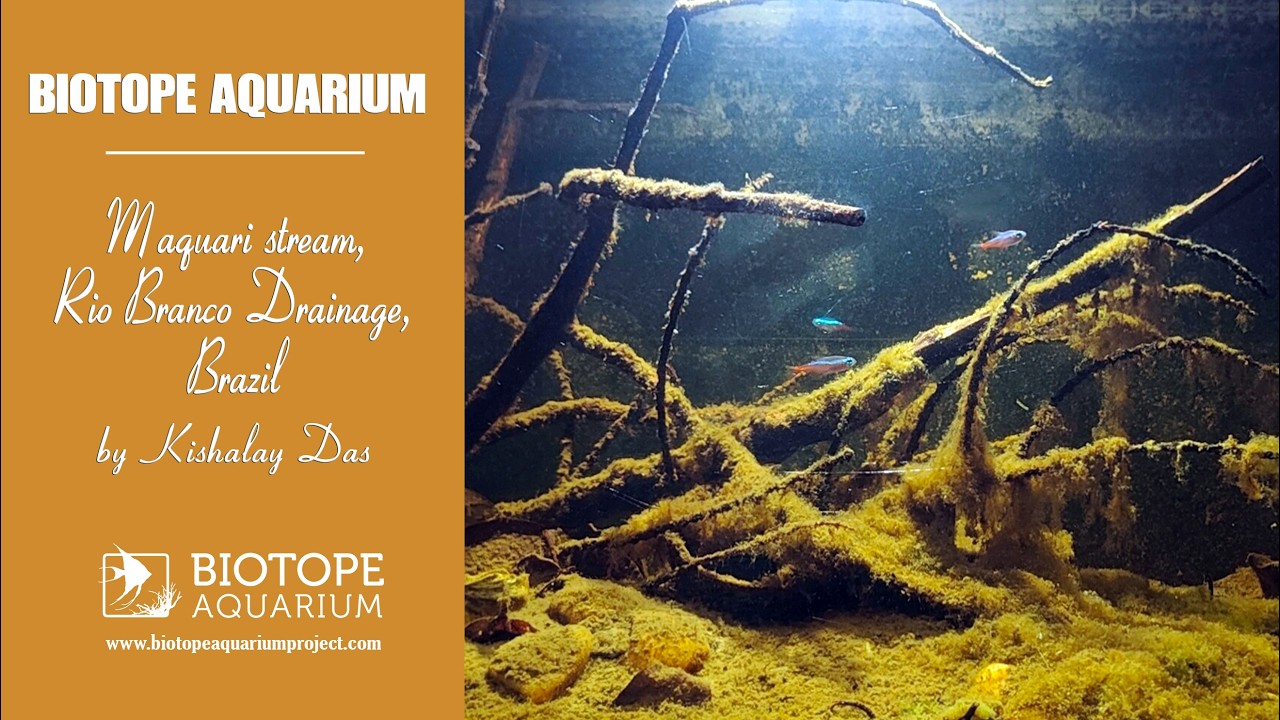
To stay true to the dense jungle canopy environment, the aquascape features a fine mud and clay base rather than gravel and lacks aquatic vegetation. The underwater landscape relies on a network of submerged driftwood, tangled roots, and a deep, decomposing leaf litter bed that provides natural refuge and releases vital humic acids. A gentle surface ripple mimics the low flow of dry-season pools.

Here, the tetras’ iridescent stripes contrast vividly against the dark, tea-colored water, demonstrating how this brilliant coloration evolved for intraspecific visibility in the dim, detritus-rich streams of the Peruvian Amazon.

Submitted by
Fordin Laskar
GPS
-4.3229170, -73.2399979
Geographical region
South America
Drainage Basin
Amazon Basin
River catchment
Río Tahuayo
Water body type
Igarapè
Water body name
Unknown
Water body part
Pool
Water body course
Middle course
Water body: tributary of
River
Tributary name
Río Tahuayo

Videos above and below water

Warning: Undefined variable $fish_parent in /home/biotopea/public_html/wp-content/themes/bap/content-bam.php on line 85

Water Chemistry

Water information

Water type
Freshwater
Water color
Black water
Water transparency
Medium
Concentration of sediments
High
Water temperature
26 °C
Water flow/curent
Slow

Chemical parameters

pH
5.5
Conductivity
GH
10 mg/l
dGH
KH
10 mg/l
dKH
Dissolved Oxygen

Aquarium information

Aquarium description

Set-up date
26.07.2025
Aquarium decoration

To accurately replicate the natural igarapé margin shown in the Peruvian reference footage found on YouTube (link attached in the BIN), this setup completely omits aquatic plants and relies entirely on organic matter and hardscape.

The substrate consists of fine clay and mud rather than commercial sand, providing a highly realistic silted base. Numerous thin, tangled twigs and branches were arranged to simulate the complex submerged root systems typical of flooded Neotropical forest margins. A heavy, undisturbed layer of leaf litter and natural yellowish mulm coats the bottom and the wood, creating the authentic, detritus-rich environment where wild Paracheirodon innesi naturally congregate.

Fish:

  • Paracheirodon innesi (Characidae)
Aquarium equipment

The lighting consists of a custom-built DIY overhead fixture holding a single LED spotlight. This specific design choice creates a dramatic, concentrated beam of light that mimics dappled sunlight piercing through a dense, overhanging jungle canopy.

I used a DIY side sump filtration system to maintain the sluggish, laminar flow of a dry-season pool and to ensure that the delicate clay and mulm substrate is not continuously disturbed and suspended in the water column.

Fish care

The Paracheirodon innesi thrive in this setup because the deeply shaded, tannin-stained water and abundant tangled branches provide exceptional security. The dim lighting encourages natural schooling behavior and makes their iridescent lateral stripes contrast vividly against the dark background – a trait evolved for intraspecific visibility in detritus-rich habitats. They are fed a high-quality, varied diet of micro-pellets and small frozen foods, such as daphnia and mosquito larvae, to replicate the microcrustaceans and aquatic insects they consume in the wild.

Plant care

This biotope contains no live aquatic plants. This is a strict, intentional choice to accurately reflect the heavily shaded, detritus-driven igarapé margins of the Río Tahuayo basin, where submerged aquatic vegetation cannot survive due to limited sunlight penetration and highly acidic water conditions.

Water care

Maintenance is strictly designed to preserve the highly acidic, mineral-poor blackwater chemistry. Small, routine water changes of 10-15% are conducted using pure RO (Reverse Osmosis) water to keep conductivity and hardness near zero. The heavy mulm and sediment layer is intentionally left undisturbed during siphoning to protect the established biological ecosystem and maintain the realistic appearance of the aquarium. Decaying leaves and botanicals are periodically replenished to sustain the rich, tea-colored tannins and essential humic acids.

Dimensions

Length
46 cm
Depth
35 cm
High
35 cm
Volume
54 L

Substrate in aquarium

Sand
None
Pebble/Gravel
Grey
Stone
None
Stone form
Silt/Mud
Grey
Leaves
Adundant
Driftwood
Many
Submerged terrestrial vegetation
None