bam Demanding level

#10769 Wetland area, Li-cun River, QingDao, China

Sponsored by

China, Qingdao, Shandong

Having lived in Qingdao, China, for many years, I have developed a deep appreciation for its rich natural environment and freshwater ecosystems. I have always been fascinated by aquatic organisms and their habitats, and I enjoy observing and maintaining native species under conditions that closely resemble their natural environment.

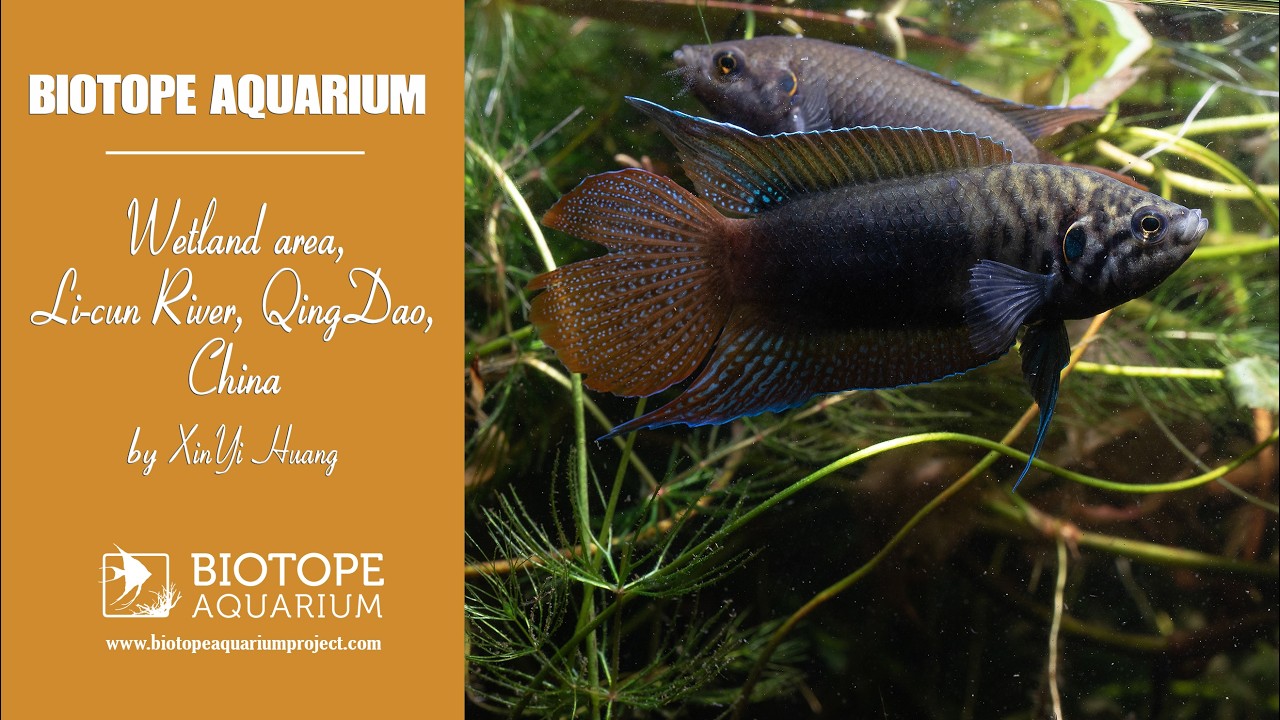
Macropodus chinensis is a particularly interesting native species in this region. It inhabits still or slow-flowing waters with abundant aquatic vegetation, where it constructs bubble nests, spawns, and provides parental care for its offspring until they become independent.

To recreate these natural conditions, I selected aquatic plants characteristic of its native habitat and established a biotope aquarium that reflects this community. The behaviour and condition of the fish indicate that they have adapted well to the environment, and I expect them to exhibit reproductive behaviour in the near future. I will continue to observe and document their behaviour as the aquarium develops.

Submitted by
XinYi Huang
GPS
36.1666985, 120.4332962
Geographical region
Eastern Asia
Drainage Basin
Yellow Sea
River catchment
Water body type
River
Water body name
Li-cun
Water body part
Pool
Water body course
Middle course
Water body: tributary of
Tributary name

Videos above and below water

Warning: Undefined variable $fish_parent in /home/biotopea/public_html/wp-content/themes/bap/content-bam.php on line 85

Water Chemistry

Water information

Water type
Freshwater
Water color
Clear water
Water transparency
High
Concentration of sediments
Medium
Water temperature
24 °C
Water flow/curent
None

Chemical parameters

pH
6.8
Conductivity
180
GH
dGH
KH
dKH
Dissolved Oxygen

Aquarium information

Aquarium description

Set-up date
April, 2026
Aquarium decoration

The substrate of this biotope aquarium was selected to replicate the sandy riverbed of the natural habitat. Tree trunks, fallen leaves, and branches were collected from the riverbank, while mud surrounding the plant roots was retained to protect the root systems, enhance substrate fertility, and introduce beneficial microorganisms. All hardscape materials were carefully selected to reflect the conditions observed in the natural environment.

Fish:

  • Macropodus chinensis (Osphronemidae)
  • Carassius auratus (Cyprinidae)
  • Oryzias latipes (Adrianichthyidae)

Amphibian:

  • Pelophylax nigromaculatus (Ranidae)

Mollusc:

  • Radix auricularia (Lymnaeidae)

Wetland plants:

  • Schoenoplectus trisetosus (Cyperaceae)
  • Phragmites australis (Poaceae)
  • Alisma plantago-aquatica (Alismataceae)
  • Oenanthe javanica (Apiaceae)

Aquatic plants:

  • Nymphoides peltata (Menyanthaceae)
  • Hydrilla verticillata (Hydrocharitaceae)
  • Ceratophyllum demersum (Ceratophyllaceae)
Aquarium equipment
  • Air pump
  • LED aquarium lighting
Fish care

Feeding: Fish are fed every 1–2 days.

Plant care

Aquatic plants are trimmed when excessive growth occurs to maintain a balanced aquarium environment.

Water care

A 20% water change is performed weekly to maintain stable water quality.

Dimensions

Length
120 cm
Depth
55 cm
High
50 cm
Volume
330 L

Substrate in aquarium

Sand
Beige
Pebble/Gravel
None
Stone
Mixed
Stone form
Irregular
Silt/Mud
None
Leaves
Few
Driftwood
Few
Submerged terrestrial vegetation
Yes

Bibliography

  • Fresh water fishes of China by Li fan
  • Catalog of Fish Species in Shandong Province by Cheng qingtai, Zhou caiwu