bin
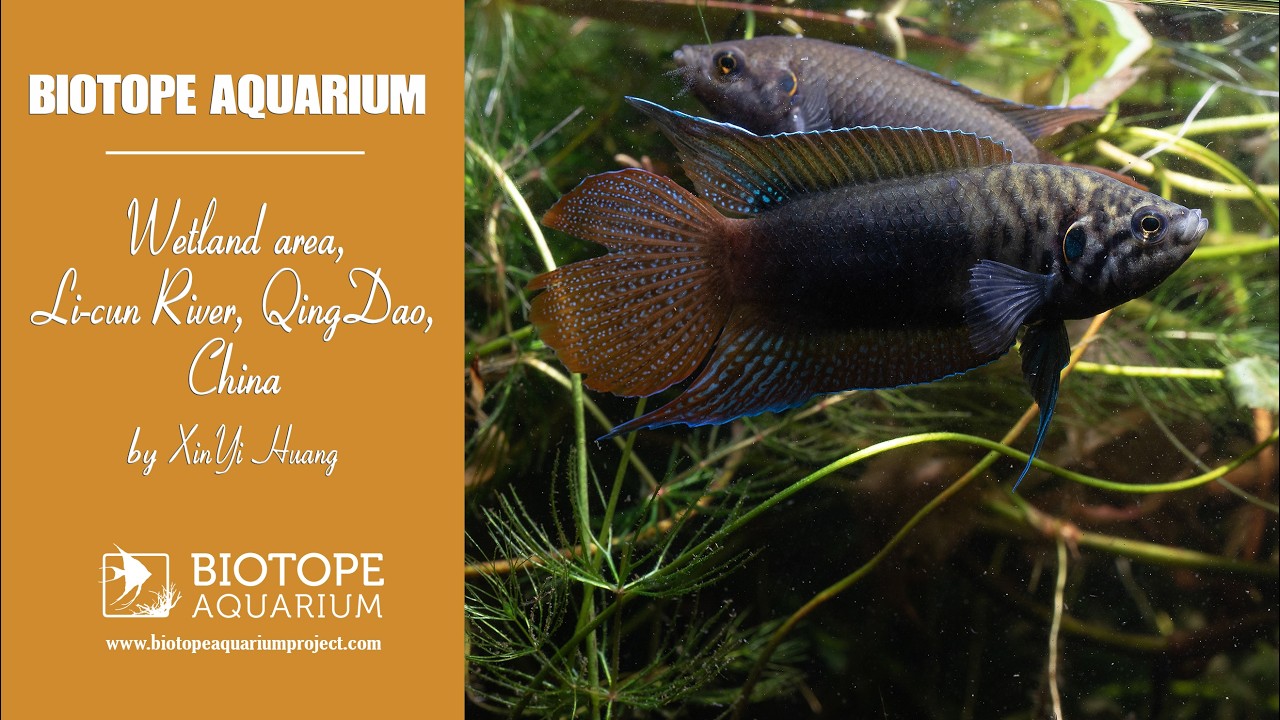
Wetland area, Li-cun River, QingDao, China
China, Qingdao, Shandong
I have always been fascinated by aquatic organisms and their natural habitats, and I enjoy observing native species under conditions that closely resemble their environment.
This aquarium recreates the habitat of Macropodus chinensis, a small freshwater fish native to this region. The species inhabits calm waters with abundant aquatic vegetation, where it builds bubble nests, spawns, and provides parental care for its offspring until they become independent.
To reproduce these conditions, I selected aquatic plants typical of its natural habitat and created a community layout that reflects the structure of the original environment. The behaviour and overall condition of the fish indicate that they have adapted well to the aquarium. I expect them to display breeding behaviour in the near future and will continue to observe and document their reproductive activities.
- Submitted by
- Huang Xinyi
- Approved by
- Sun Kai, Zhou Hang & Wei-Cheng Jhuang
- GPS
- 36.1666985, 120.4332962
- Geographical region
- Eastern Asia
- Drainage Basin
- Yellow Sea
- River catchment
- Water body type
- River
- Water body name
- Li-cun
- Water body part
- Pool
- Water body course
- Middle course
- Water body: tributary of
- Tributary name
Videos above and below water
Warning: Undefined variable $fish_parent in /home/biotopea/public_html/wp-content/themes/bap/content-bin.php on line 55
Water Chemistry
Water information
- Water type
- Freshwater
- Water color
- Clear water
- Water transparency
- High
- Concentration of sediments
- Medium
- Water temperature
- 24 °C
- Water flow/curent
- None
Chemical parameters
- pH
- 6.8
- Conductivity
- 980
- GH
- dGH
- KH
- dKH
- Dissolved Oxygen
Substrate in nature
- Sand
- Beige
- Pebble/Gravel
- None
- Stone
- Grey
- Stone form
- Irregular
- Silt/Mud
- Grey
- Leaves
- Many
- Driftwood
- Few
- Submerged terrestrial vegetation
- Yes
Aquatic Biotope
- Date of collecting
- 10 July, 2026
- Collecting area
- River bank
- Water depth
- 0,2m
- Air temperature
- 28 °C
- Sunlight
- Full sun
Environment
- Environment
- Human settlements
- Human settlements
- Dispersed
- Surrounding area
The Licun River is a river in the city of Qingdao. Due to urban development, it was partially dried up in the past. However, following restoration and management efforts, it has become a scenic urban river that provides suitable habitat for aquatic plants and animals. Since the restoration, the abundance and diversity of fish, waterbirds, and other wildlife have increased year by year.
- Underwater landscape
The riverbanks are covered with emergent vegetation and aquatic plants. The slow-flowing sections of the river have little or no current, providing ideal habitat for Macropodus chinensis. The complex vegetation structure offers excellent shelter and breeding sites for this species.
Fish:
- Macropodus chinensis (Osphronemidae)
- Carassius auratus (Cyprinidae)
- Oryzias latipes (Adrianichthyidae)
Amphibian:
- Pelophylax nigromaculatus (Ranidae)
Mollusc:
- Radix auricularia (Lymnaeidae)
Aquatic plants:
- Nymphoides peltata (Menyanthaceae)
- Hydrilla verticillata (Hydrocharitaceae)
- Ceratophyllum demersum (Ceratophyllaceae)
Wetland plants:
- Schoenoplectus trisetosus (Cyperaceae)
- Phragmites australis (Poaceae)
- Alisma plantago-aquatica (Alismataceae)
- Oenanthe javanica (Apiaceae)
- Threats to ecology
-
Riparian zone
- Trees near the aquatic habitat
-
Many -
Bibliography
-
Fresh water fishes of China
by Li Fan
-
Catalog of Fish Species in Shandong Province
by Cheng Qingtai/Zhou Caiwu
Comment by the expert
Wei-Cheng Jhuang: This is a well-documented wetland habitat, with detailed information on the locality, environmental conditions, flora, and fauna. However, the underwater documentation is limited. No underwater photos are provided, and the aquatic organisms in the video are too unclear for reliable identification. Clearer underwater photos or footage would help verify the species present and better show the submerged habitat. Some scientific names should also be updated: Macropodus chinensis to M. ocellatus, and Oryzias latipes to O. sinensis for the Shandong population. I also noticed a considerable difference in conductivity between the natural habitat (980) and the aquarium (180). It would be helpful to clarify the reason for this difference and specify the units of measurement.
Some ecological statements would also benefit from stronger supporting evidence. For example, the description mentions that biodiversity has increased following habitat restoration and that introduced species have not yet established large populations or caused significant impacts on native species. Providing specific references, survey data, or further field observations would make these statements more convincing.
Overall, this is an informative habitat presentation, but clearer underwater documentation, updated taxonomy, and stronger supporting evidence would improve its scientific value.