bin
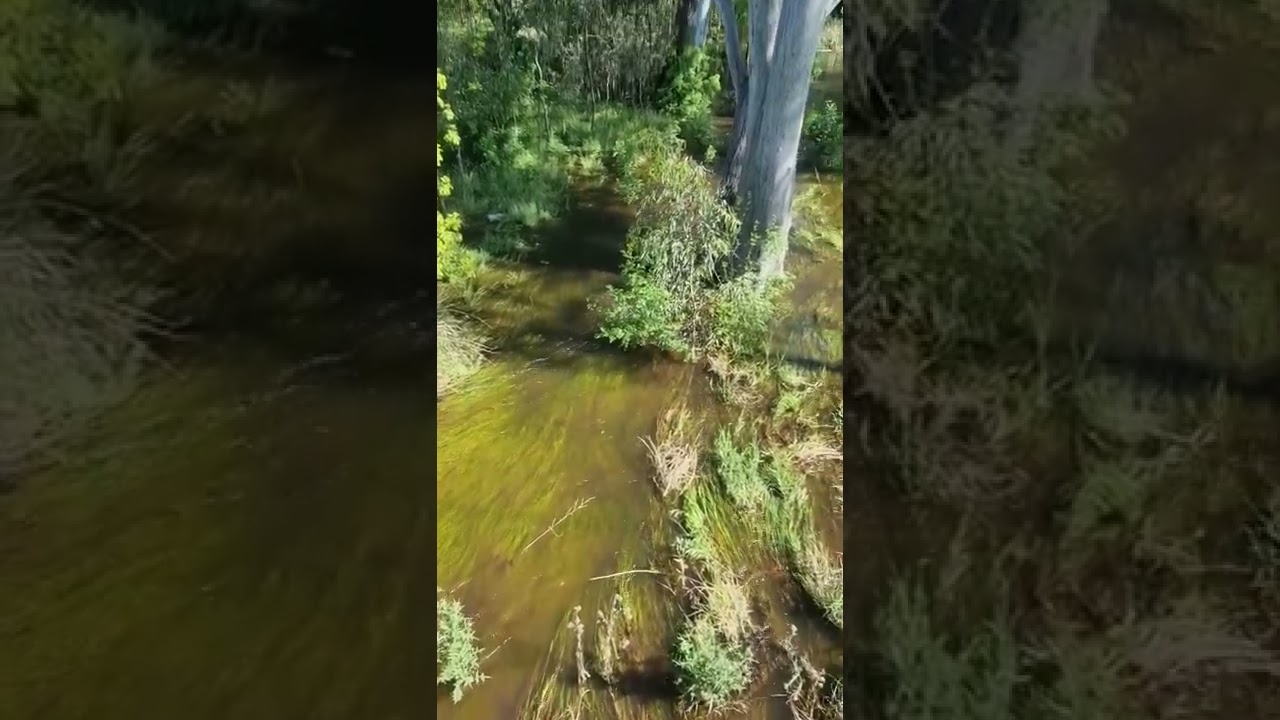
Forest stream, Puca Urco area, Rio Nanay affluent, Peru
Peru, Loreto, Mariscal Ramón Castilla Province (Pebas area)
The Rio Nanay is a left-bank tributary of the Amazon River, joining it near the city of Iquitos, Peru. It flows through tropical rainforest and is fed by numerous smaller tributaries and forest streams.
One of the most interesting areas is around Puca Urco, where many small tributaries converge. The steep, undercut banks of these forest streams create a striking landscape. Unlike gently sloping shores that gradually merge into sandy substrates, these streams are characterised by sharply eroded banks that seem to plunge directly into the water. Parts of the banks, together with the surrounding riparian vegetation, are often seasonally flooded, creating a unique and dynamic habitat.
- Submitted by
- Jacek Pietrzak
- Approved by
- Roberto E. Reis, Pablo C. Lehmann & Antonio Machado-Allison
- GPS
- -3.2681320, -74.3097839
- Geographical region
- South America
- Drainage Basin
- Rio Amazonas
- River catchment
- Rio Nanay
- Water body type
- Stream
- Water body name
- Forest stream near Puca Urco
- Water body part
- Flood plain
- Water body course
- Middle course
- Water body: tributary of
- River
- Tributary name
- Rio Nanay
Videos above and below water
Warning: Undefined variable $fish_parent in /home/biotopea/public_html/wp-content/themes/bap/content-bin.php on line 55
Water Chemistry
Water information
- Water type
- Freshwater
- Water color
- Mixed water
- Water transparency
- High
- Concentration of sediments
- Medium
- Water temperature
- 26.5 °C
- Water flow/curent
- Slow
Chemical parameters
- pH
- 6.0
- Conductivity
- 24
- GH
- 2 mg/l
- dGH
- KH
- 1 mg/l
- dKH
- Dissolved Oxygen
- 5 %
Substrate in nature
- Sand
- Beige
- Pebble/Gravel
- None
- Stone
- None
- Stone form
- Silt/Mud
- Brown
- Leaves
- Many
- Driftwood
- Many
- Submerged terrestrial vegetation
- Yes
Aquatic Biotope
- Date of collecting
- Collecting area
- River bank
- Water depth
- 0,5m
- Air temperature
- Sunlight
- Full sun
Environment
- Environment
- Affected by human activity
- Affected by human activity
- Agriculture
- Agriculture
- Little
- Surrounding area
Puca Urco is a small settlement in the Loreto Region of the Peruvian Amazon, located near the Nanay and Pintuyacu rivers. The region is currently facing a serious environmental threat caused by illegal gold mining using dredges, which severely damages local ecosystems.
Mercury is used during the extraction process, contaminating both the water and the fish. As mercury enters the food chain (fish → people), it increases the risk of neurological disorders and mercury poisoning while also reducing the quality of drinking water for the city of Iquitos, located downstream.
Terrestrial vegetation
- Ceiba pentandra (Malvaceae)
- Dipteryx odorata (Fabaceae)
- Mauritia flexuosa (Arecaceae)
- Euterpe precatoria (Arecaceae)
- Underwater landscape
During the rainy season, the river floods the surrounding forest. Tree roots, branches, and the trunks of fallen trees become submerged. A thick layer of leaf litter covers the bottom, while large aquatic plants are almost absent. The result is a submerged forest that resembles an underwater jungle.
The riverbed consists mainly of white or brown sand, with no rocks or stones. In some areas, a layer of silt and decomposing leaves accumulates on the bottom. These conditions provide habitat for small schooling fish (mainly characins), dwarf cichlids, and small bottom-dwelling catfish. In some places, human activities have disturbed the substrate, making it more unstable.
Fish
- Apistogramma agassizii (Cichlidae) – 4
- Nannostomus marginatus (Lebiasinidae) – 20
- Otocinclus affinis (Loricariidae) – 11
Wetland plant
- Helanthium tenellum (Alismataceae) – 100
Aquatic plant
- Hydrocotyle leucocephala (Araliaceae) – 100
- Threats to ecology
The Rio Nanay region near Puca Urco (Loreto, Peruvian Amazon) is of exceptional ecological importance, as it forms part of one of the world’s most fragile and biologically diverse ecosystems. It belongs to the Amazon Basin, the largest river system on Earth, linking seasonally flooded forests with the Amazon’s main ecological corridor. The river acts as a lifeline for the entire region, and environmental changes here can affect large parts of the Amazon. It was this remarkable ecosystem that inspired me to recreate the region in my aquarium.
Riparian zone
- Trees near the aquatic habitat
-
Many -
Comment by the expert
Roberto E. Reis: Good video and description of the water body, fair list of fishes and aquatic plants. Superficial description of above-water environment.
Pablo C. Lehmann: A good site-specific description with clear attention to the Puca Urco landscape, seasonal flooding and the serious threat from illegal gold mining and mercury contamination. Aquatic habitat data are comparatively complete and the underwater landscape is well described. The species section is rather narrow, however, and the use of Otocinclus affinis for a Nanay locality needs taxonomic/distribution verification. The bibliography contains several relevant scholarly sources and is a clear strength.
Antonio Machado-Allison: Good.