bin
Lake Tanganyika, Kigoma Region, Tanzania
Tanzania, Kigoma Region, Kigoma District
The Shell Bed Zone near Lake Tanganyika holds significant archaeological value, having produced a wealth of prehistoric artifacts, including stone tools and fossilized shells. These discoveries provide valuable insights into early human settlement in the region, shedding light on how ancient communities interacted with the lake – most likely using it as a vital resource for food gathering, such as collecting mollusks, and accessing fresh water.
Human habitation in this area stretches back tens of thousands of years. The presence of extensive shell beds suggests a long-standing relationship between people and the lake, highlighting its importance in sustaining early populations.
Lake Tanganyika itself is a remarkable natural feature. As one of the world’s oldest and deepest lakes – estimated to be between 9 and 12 Mln years old – it supports an extraordinary and unique ecosystem. The lake is particularly renowned for its biodiversity, especially its rich population of cichlid fish, with over 250 species found nowhere else on Earth.
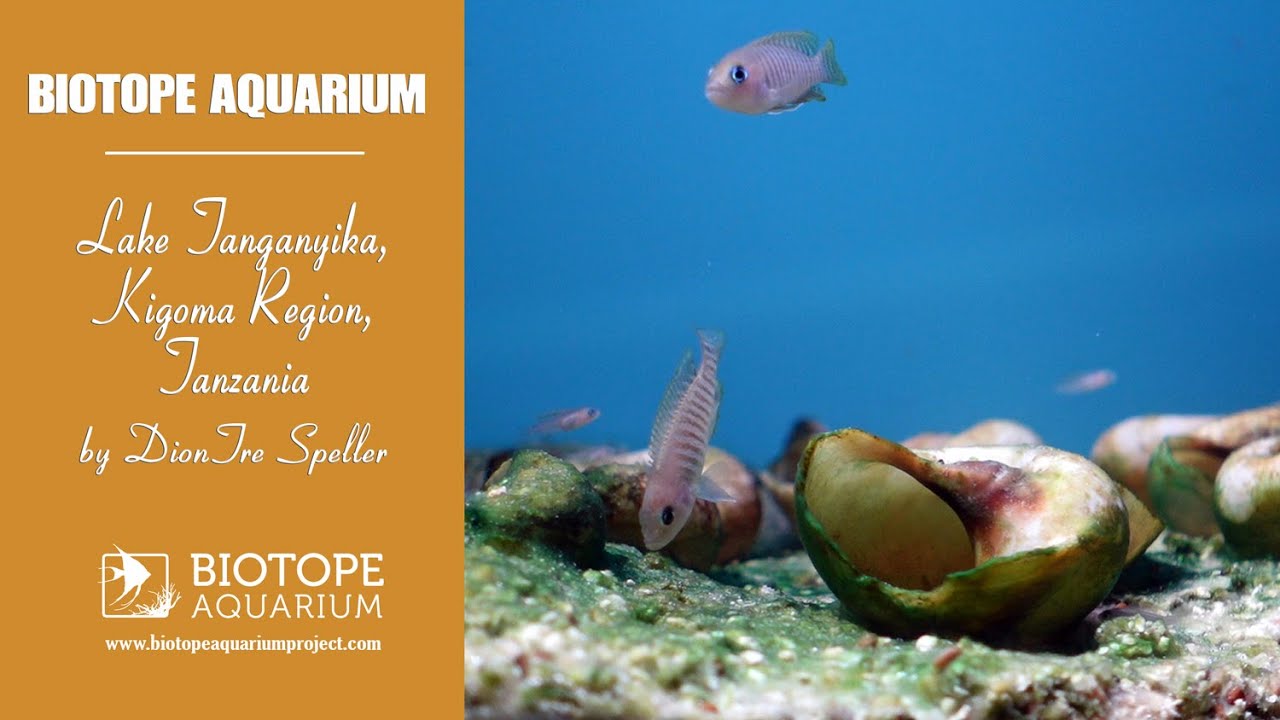
Ecologically, the shell beds are primarily composed of the remains of Neothauma tanganyicense, a species of freshwater snail. These dense shell accumulations play a crucial ecological role, forming microhabitats that support a variety of aquatic species. Among them are shell-dwelling cichlids, which rely on these shells for breeding, shelter, and protection from predators.
Geographically, Lake Tanganyika lies within the East African Rift System, but hydrologically, it’s part of the Congo Basin, one of the largest river basins in the world.
- Submitted by
- DionTre Speller
- Approved by
- Ad Konings & Anton Lamboj
- GPS
- -6.3751111, 29.7897224
- Geographical region
- Eastern Africa
- Drainage Basin
- Congo River Basin
- River catchment
- Lake Tanganyika Catchment
- Water body type
- Lake
- Water body name
- Lake Tanganyika
- Water body part
- Open water
- Water body course
- Water body: tributary of
- River
- Tributary name
- Malagarasi
Videos above and below water
Warning: Undefined variable $fish_parent in /home/biotopea/public_html/wp-content/themes/bap/content-bin.php on line 55
Water Chemistry
Water information
- Water type
- Water color
- Clear water
- Water transparency
- High
- Concentration of sediments
- Low
- Water temperature
- 24°C to 28°C °C
- Water flow/curent
- Slow
Chemical parameters
- pH
- 8.6
- Conductivity
- 600
- GH
- 10 mg/l
- dGH
- KH
- 16 mg/l
- dKH
- Dissolved Oxygen
- 17 %
Substrate in nature
- Sand
- Beige
- Pebble/Gravel
- Beige
- Stone
- None
- Stone form
- Irregular
- Silt/Mud
- None
- Leaves
- None
- Driftwood
- None
- Submerged terrestrial vegetation
- None
Aquatic Biotope
- Date of collecting
- Collecting area
- Water depth
- Air temperature
- Sunlight
Environment
- Environment
- Affected by human activity
- Affected by human activity
- Agriculture
- Agriculture
- Advanced
- Surrounding area
The area is located on the eastern shore of Lake Tanganyika, characterized by gently sloping hills, lowland plains, and rocky or sandy beaches where shell beds accumulate.
Inland, the terrain gradually rises into wooded hills and dry miombo woodlands, which are typical of western Tanzania.
Riparian zone:
Rocky or sandy shorelines with limited vegetation; where present, grasses and shrubs dominate.
Terrestrial vegetation & vurrounding vrea:
Dry savanna or scrubland near the lake. Local villages and fishing activity may exist nearby.
- Underwater landscape
Underwater Landscape:
Sandy bottom with scattered dense patches of Neothauma shells. Minimal plant life; periphyton and biofilm on shells and rocks. Light algae coating is common.
- Threats to ecology
Threats to Ecology:
- Pollution: Agricultural runoff and untreated sewage in coastal towns.
- Overfishing: Targeting of endemic species can upset ecological balance.
- Shell Collection: Local populations sometimes remove Neothauma shells for sale or use, damaging microhabitats.
- Climate Change: Altered rainfall and temperature patterns may affect lake stratification and water chemistry.
Bibliography
-
Oxford University Press - Lake Tanganyika and its Life
by Coulter, G. W.
-
Quaternary International - Shell beds in Lake Tanganyika: Evidence of Holocene lake-level fluctuations and mollusk colonization, 37(1), 35–44
by Kimura, D
Comment by the expert
Ad Konings: Lot of incorrect and rambling information in introduction that has no bearing on the environment of the chosen biotope. No fish-plant listed.
Anton Lamboj: I miss literature about fish and fish diversity in the biotope.