bin
Soukou River, Nianaya, Kindia Prefecture, Guinea
Guinea, Kindia Prefecture, Nianaya
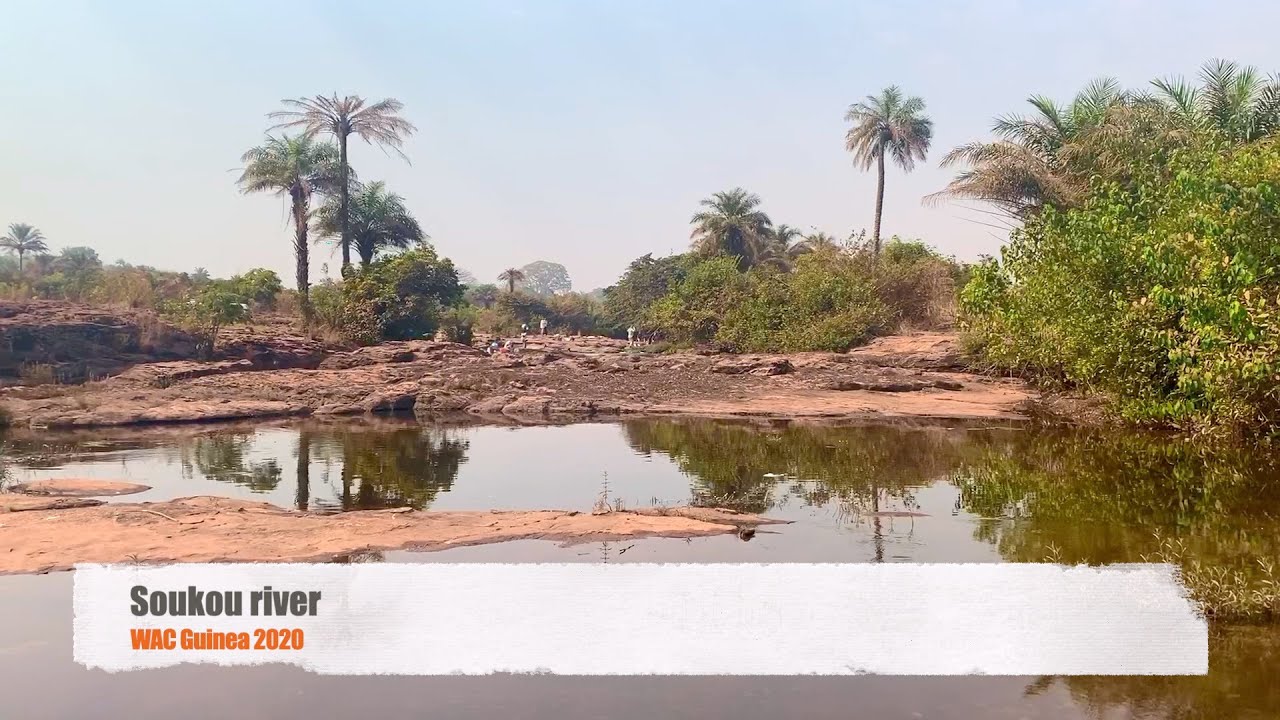
The Soukou River in Guinea is a captivating aquatic habitat. This relatively small and clear stream near the hamlet of Nianaya is rich in biodiversity. The area is known for its striking bauxite-rich landscape, giving the ground a distinctive rusty hue. The Soukou River, spanning about six meters in width at certain points, features clear waters with underwater visibility reaching up to six meters.
The river’s shallow depths, reaching a maximum of 100 cm, provide an ideal environment for various species, including a number of aquarium fish and plant favourites native to this region. The Soukou River is characterized by large stone plateaus often covered in algae, serving as feeding grounds for numerous fish species. Overhanging grasses and branches offer necessary hiding spots for smaller species. The are around this river is dominated by savannah surroundings.
- Submitted by
- David Nørholm
- Approved by
- Ad Konings & Anton Lamboj
- GPS
- 9.9042768, -13.0413465
- Geographical region
- Western Africa
- Drainage Basin
- Konkoure River
- River catchment
- Samou River
- Water body type
- River
- Water body name
- Soukou
- Water body part
- Channel
- Water body course
- Lower course
- Water body: tributary of
- River
- Tributary name
- Samou
Videos above and below water
Warning: Undefined variable $fish_parent in /home/biotopea/public_html/wp-content/themes/bap/content-bin.php on line 55
Water Chemistry
Water information
- Water type
- fresh-water
- Water color
- Mixed water
- Water transparency
- Medium
- Concentration of sediments
- High
- Water temperature
- 23 °C
- Water flow/curent
- Slow
Chemical parameters
- pH
- 5.8
- Conductivity
- 6
- GH
- dGH
- KH
- dKH
- Dissolved Oxygen
Substrate in nature
- Sand
- Beige
- Pebble/Gravel
- Beige
- Stone
- Grey
- Stone form
- Roundish
- Silt/Mud
- Brown
- Leaves
- Few
- Driftwood
- Few
- Submerged terrestrial vegetation
- Yes
Aquatic Biotope
- Date of collecting
- 24 February, 2020
- Collecting area
- River bank
- Water depth
- 1,0m
- Air temperature
- 28 °C
- Sunlight
- Full sun
Environment
- Environment
- Affected by human activity
- Affected by human activity
- Deforestation
- Deforestation
- Advanced
- Surrounding area
The Soukou River in Guinea is nestled within a striking landscape characterized by its rich deposits of bauxite, lending the ground a distinctive rusty hue. This remote and relatively small stream, near the hamlet of Nianaya, is surrounded by a savannah environment dominated by tall grasses and trees near the riverbank. Despite its isolation, the area is frequented by locals and supports diverse aquatic life, including the notable Pelvicachromis roloffi, Anomalochromis thomasi and others.
The surrounding area of the Soukou River features both savannah and remnants of primary forest. The forrest nearest the river still remains relatively untouched, but large areas has also been cutdown by locals who rely on firewood. This blend of dry, grassy terrain and shaded, forested banks creates a unique habitat for various species. Large stone plateaus on the riverbed, often covered with algae due to the sun exposure during the dry season, provide ideal feeding grounds for fish.
The Soukou river are characterized by overhanging grasses and branches, creating dense roots under the water surface. This offers necessary hiding places for smaller species and supporting aquatic plants such as Anubias, Bolbitis, and Vallisneria. These elements make the Soukou River and its surroundings a vital habitat in Guinea’s diverse ecosystem.
- Underwater landscape
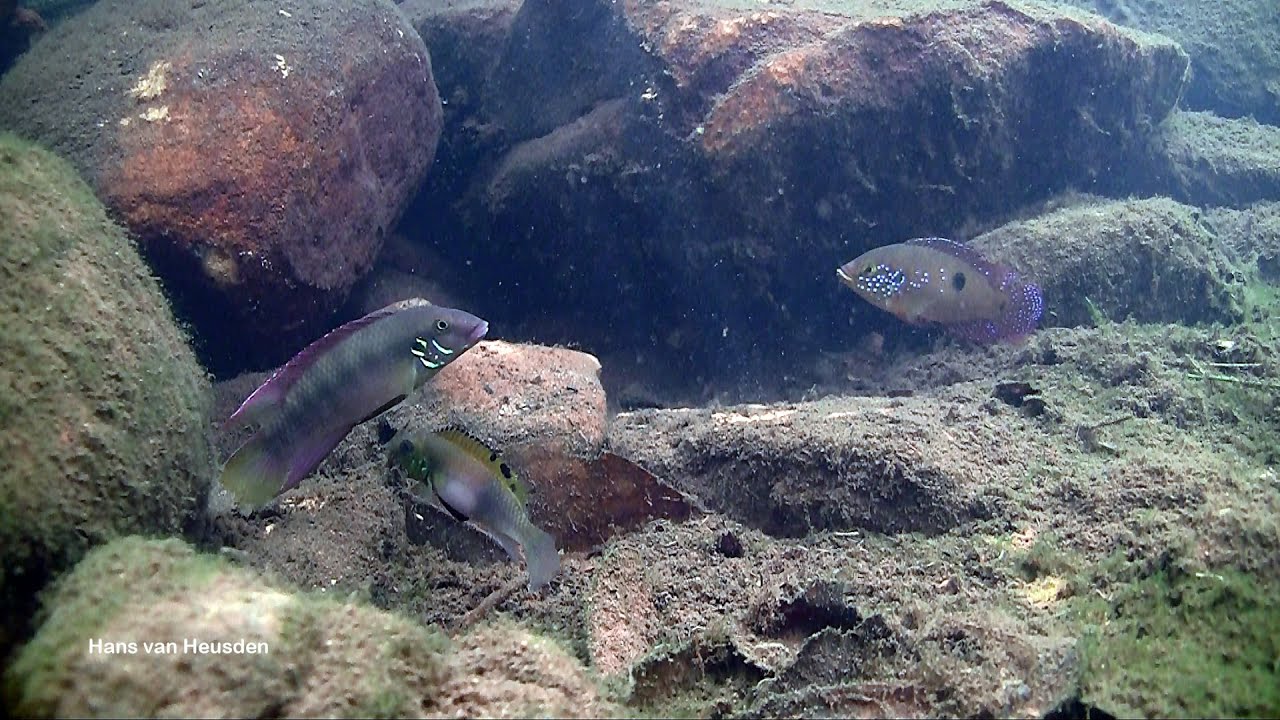
The underwater landscape of the Soukou River in Guinea is a captivating and diverse environment. The river’s relatively clear waters, with visibility reaching up to six meters in some parts, reveal a vibrant ecosystem below the surface. The water cannot be cathegorized as ‘blackwater’, although it is brown colored to some degree. The riverbed is dominated by large stone plateaus.
The river, relatively shallow with maximum depths of about 100 cm, features areas with overhanging grasses and branches that extend into the water from the banks. These overhanging plants provide crucial hiding spots for smaller fish species, such as the Pelvicachromis roloffi. These overhaning areas are also dominated by roots from time to time. Additionally, the Soukou River supports a range of aquatic plants, including species of Anubias, Bolbitis, and Vallisneria. These plants contribute to the river’s biodiversity and offer shelter and breeding grounds for aquatic life.
The riverbed is dominated by a thick layer of sediment, which also serves as a hiding place for spawning fish and fry.
The water values of the Soukou River are distinctive, with a pH of 5.83, conductivity of 6µS, and a temperature of 22.8°C. These conditions support a unique community of organisms adapted to the specific parameters of this habitat. The combination of freshwater, diverse plant life, and sediment covered stones and river bottom creates a dynamic and thriving underwater landscape that is essential for the river’s ecological balance.
Fishes
- Amphilius sp. (Amphiliidae)
- Ctenopoma sp. (Anabantidae)
- Ladigesia roloffi (Alestidae)
- Anomalochromis thomasi (Cichlidae)
- Hemichromis fasciatus (Cichlidae)
- Hemichromis cf. guttatus (Cichlidae)
- Coptodon sp. (Cichlidae)
- Pelvicachromis roloffi (Cichlidae)
- Auchenoglanis sp. (Claroteidae)
- Chiloglanis sp. (Mochokidae)
- Enteromius sp. (Cyprinidae)
- Epiplatys sp. (Nothobranchiidae)
Aquatic plants:
- Vallisneria sp. (Hydrocharitaceae)
- Bolbitis sp. (Dryopteridaceae)
- Nymphaea lotus (Nymphaeaceae)
- Threats to ecology
The list of threats to this area is long and includes deforestation, aggriculture, water pollution, dams, over fishing, human settlement and invasive species.
However, the greatest threats are deforestation and agriculture, which are often two sides of the same problem.
Riparian zone
- Trees near the aquatic habitat
-
Many -
Comment by the expert
Ad Konings: The habitat is well described and the underwater video gives a perfect overview of the habitat, however, the water plants listed were not seen in the video while Vallisneria was the most recognizable (and also used in the aquarium).
Anton Lamboj: There is more information existing, however it is a selection I would say OK.