- Breeding tank set-up
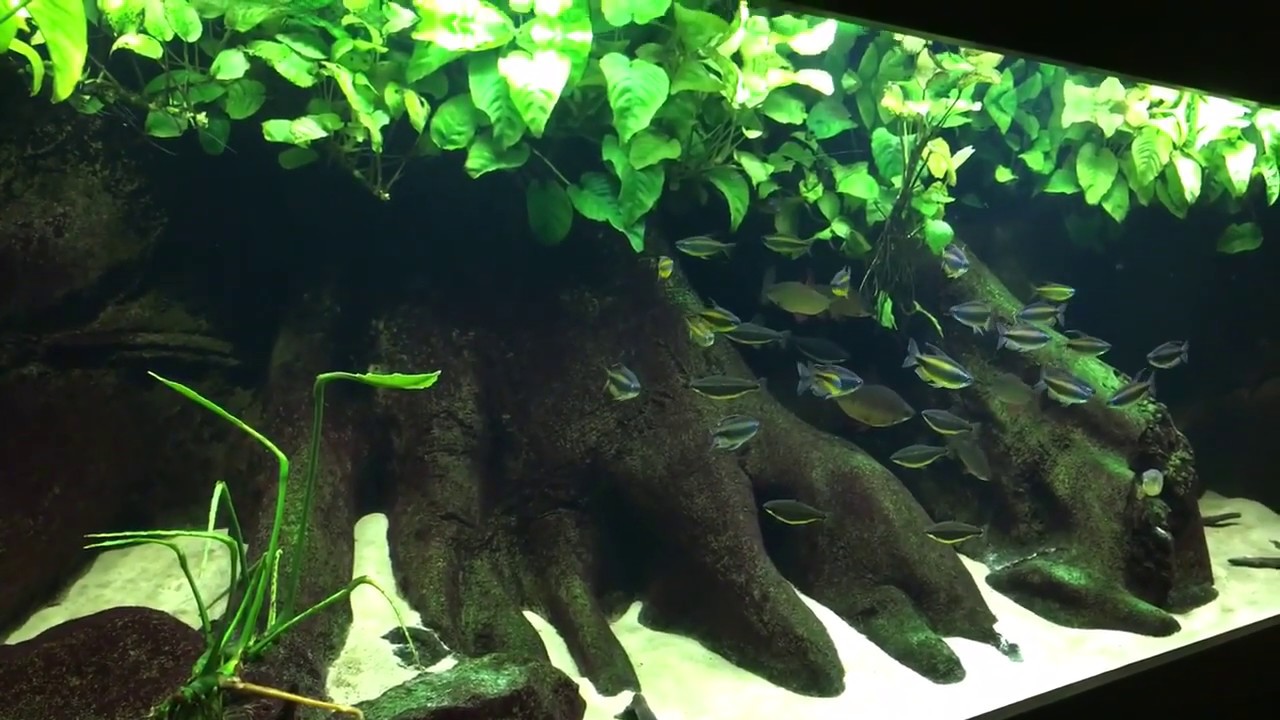
Breeding Phenacogrammus interruptus in captivity requires careful attention to mimic the subtle conditions of their natural Congo River habitat. A dedicated breeding tank should be at least 70-80 L for a small group, providing sufficient swimming space while keeping conditions manageable for observation and egg collection. The tank should be long rather than tall, reflecting the fish’s preference for mid-water swimming in horizontal space.
The substrate should ideally consist of fine mesh or a layer of marbles, which allows eggs to fall through and prevents adults from eating them. This simple protection is critical, as Congo Tetras are prolific egg-scatterers and do not provide parental care. Adding a thin layer of dark-colored sand beneath the mesh can further enhance the visibility of eggs and help reduce stress in the adults by creating a natural-looking environment.
Planting is key: include delicate floating plants such as Salvinia or Riccia mats, which provide surfaces for egg adhesion and offer gentle shade. Hardy stem plants, Java moss, or fine-leaved species like Cabomba can also serve as egg deposition sites and give the adults hiding spots, mimicking their natural backwater environment. Avoid dense or sharp-leaved plants that could damage the delicate fins of males during courtship displays.
Lighting should be subdued to recreate the dappled sunlight filtering through forest canopy in the Congo Basin. A low-intensity light or partial floating plant cover helps reduce stress and encourages natural spawning behavior. The water flow should be gentle, replicating the slow to moderate currents of their native streams. Aeration can be provided through a sponge filter, which ensures mild circulation and maintains excellent water quality without creating strong currents that could dislodge eggs.
Water parameters should be carefully monitored. Soft, slightly acidic water (pH ~6.0-6.5) with a temperature of 24-26 °C encourages spawning, while stable conditions reduce stress and increase the likelihood of successful egg laying. Regular water changes using aged or dechlorinated water help maintain optimal chemistry, while a healthy diet of high-quality live and frozen foods conditions adults for breeding.
Finally, plan for parent removal immediately after spawning. Adults have a tendency to eat their eggs, so transferring them back to the main display tank or another holding tank ensures maximum egg survival. With careful attention to space, planting, water chemistry, and gentle flow, the breeding tank can closely emulate the Congo biotope, giving both the adults and their offspring the best chance of thriving.
- Nutrition parents
Proper nutrition is essential to prepare Phenacogrammus interruptus adults for successful spawning. In the wild, these fish are omnivorous and opportunistic feeders, consuming a mix of small invertebrates, insect larvae, crustaceans, and plant matter. Replicating this natural diet in the aquarium ensures optimal health, enhances coloration, and stimulates reproductive readiness.
During the conditioning period, breeding adults should be offered a high-protein diet consisting primarily of live or frozen foods such as brine shrimp, daphnia, bloodworms, or mosquito larvae. These protein-rich foods help develop gonads and promote spawning behavior. Variety is important: rotating different live and frozen foods mimics the diversity of prey in their natural habitat, preventing nutritional deficiencies and encouraging the fish to display their full courtship behaviors.
Supplementary vegetable-based or biofilm-type foods – finely chopped spinach, blanched peas, or high-quality flake foods with vegetable content — provide fiber and trace nutrients that support overall wellbeing. Feeding multiple small meals throughout the day, rather than a single large portion, mirrors the natural foraging behavior of Congo Tetras, maintaining activity levels and reducing stress.
It is also important to observe the fish during conditioning: healthy, well-fed males will display brighter colors, elongated dorsal and caudal fins, and increased activity in mid-water, while females will become plumper and more robust as they accumulate eggs. Proper nutrition not only prepares the parents physiologically but also stimulates the natural courtship behaviors that are essential for successful spawning in a biotope-style aquarium.
- Mating type
- Polygamous
- Spawning behaviour
In the wild, Phenacogrammus interruptus exhibits a fascinating and dynamic spawning ritual, reflecting its evolutionary adaptation to the mid-water environments of the Congo River Basin. Spawning usually occurs in calm, slow-flowing backwaters with abundant submerged vegetation, where adults can interact freely while minimizing predation risk on eggs.
Males actively court females by displaying their elongated dorsal and caudal fins and shimmering iridescent colors, which can range from metallic blues and purples to greens and golds depending on the angle of light. These displays are a combination of visual signals and fluid swimming movements, as males weave through the water around females, often circling them or performing gentle “darts” to attract attention. Dominant males tend to take center stage in these displays, while subordinate males often observe from the periphery, waiting for opportunities to participate.
Females respond by selecting mates based on fin length, coloration, and vigor of movement. Once a female is receptive, the pair engages in synchronized swimming near the mid-water or close to floating plants and fine-leaved vegetation. The female releases eggs gradually, scattering them over plants, substrate, or other surfaces in the tank. Simultaneously, the male releases milt to fertilize the eggs externally. The process is repeated over several minutes or even hours, with the pair often returning to preferred spawning spots.
In captivity, this behavior is replicated most effectively in a well-planted, dimly lit breeding tank with gentle water flow. Observant aquarists will notice males subtly nudging females, displaying in small loops, and positioning themselves strategically among floating plants to maximize egg fertilization. It is crucial to provide a mesh or fine substrate below the eggs, as adults do not exhibit parental care and may consume the eggs if they settle within reach.
Spawning activity tends to peak during the early morning or late afternoon in aquaria, coinciding with natural diurnal activity patterns. The rhythmic, graceful movements of both males and females during this period are not only a visual delight but also an essential part of reproductive success, ensuring that eggs are fertilized efficiently and dispersed in locations mimicking their natural habitat.
- Breeding habits
- substrate-spawning
- Hatching period
- 6 days
- Number of eggs in average
- ~ 200 (typical), though up to ~300 reported
- Parental care
- no
- Fry number
- Variable, depending on survival
- Nutrition fry
Immediately after hatching, Congo Tetra fry rely on their yolk sac for the first 24–48 hours, absorbing nutrients that sustain them while they remain mostly stationary near the bottom or in protected areas of the breeding tank. Once the yolk sac is absorbed, they must be provided with tiny, easily digestible live foods, as their mouths are extremely small and their digestive systems are delicate.
The first foods typically consist of infusoria or rotifers, which are microscopic protozoans that closely resemble the natural planktonic diet of newly hatched fry in the wild. Feeding should be frequent, small portions every few hours, to mimic the constant availability of food in their native Congo River habitats. Maintaining water quality is crucial during this stage, as uneaten food can quickly pollute the tank and harm fragile fry.
After 3-5 days, fry can transition to slightly larger prey such as newly hatched Artemia (brine shrimp) nauplii, microworms, or finely crushed high-quality fry flakes. These foods provide higher protein content to support rapid growth and the development of vibrant coloration. It is recommended to introduce these foods gradually while still supplementing with infusoria to ensure fry adapt successfully.
Throughout the fry-rearing period, water conditions should be kept stable, warm (24-26 °C), and slightly acidic, reflecting their natural Congo biotope. Gentle aeration or water flow ensures oxygenation without creating strong currents that could exhaust or displace fry. Observation of feeding behavior is important: healthy fry will actively swim toward food, displaying early signs of the schooling behavior that will define their adult social structure.
As fry grow, their dietary needs expand, and gradually larger portions of protein-rich foods, along with plant-based or biofilm supplements, can be introduced. This diet ensures balanced growth, enhances survival rates, and prepares them for integration into a larger Congo biotope aquarium once they reach juvenile stages.
- Notes on reproduction
Breeding Phenacogrammus interruptus in captivity is both rewarding and delicate, as it requires closely replicating the subtle conditions of their natural Congo River habitat. Adults are egg-scatterers and free-spawners, which means they do not provide any parental care, and eggs are at risk of being eaten if left in the same tank with the adults. Therefore, a well-designed breeding setup with a mesh or fine substrate beneath plants is essential to protect the eggs.
Timing and conditioning are key. Healthy, well-fed adults, particularly males with fully developed fin extensions and vibrant coloration, exhibit natural courtship behaviors more readily. Females with mature eggs are plumper and more active in response to male displays. A slight reduction in lighting, gentle water flow, and stable water chemistry help simulate the quiet, shaded backwaters of their native rivers, encouraging spawning.
Eggs are sticky at first but quickly settle among plants or drift downward through protective mesh. They typically hatch in approximately 6 days, and fry must be separated from adults or provided with specialized food like infusoria immediately after yolk-sac absorption. Water quality is critical during this stage: small fry are extremely sensitive to ammonia, nitrites, and sudden parameter fluctuations. Frequent small feedings, proper aeration, and regular partial water changes are necessary to maximize survival.
One notable aspect of Congo Tetra reproduction is the subtle social dynamics during spawning. Males display courtship without overt aggression, and successful fertilization depends on coordinated swimming between the pair and adequate environmental cues. Observing these behaviors in a well-maintained biotope aquarium provides both visual delight and insight into the natural life cycle of this iconic African tetra.
Ultimately, while Congo Tetras are not the easiest fish to breed, careful attention to tank setup, nutrition, water quality, and social conditions can result in a successful spawn, allowing aquarists to observe and raise healthy fry that display natural behaviors and vivid coloration reminiscent of their wild counterparts.