bam Advanced/Expert level

Laguna El Arco, Ocoyoacac, México

Sponsored by

Mexico, Estado de México, Ocoyoacac

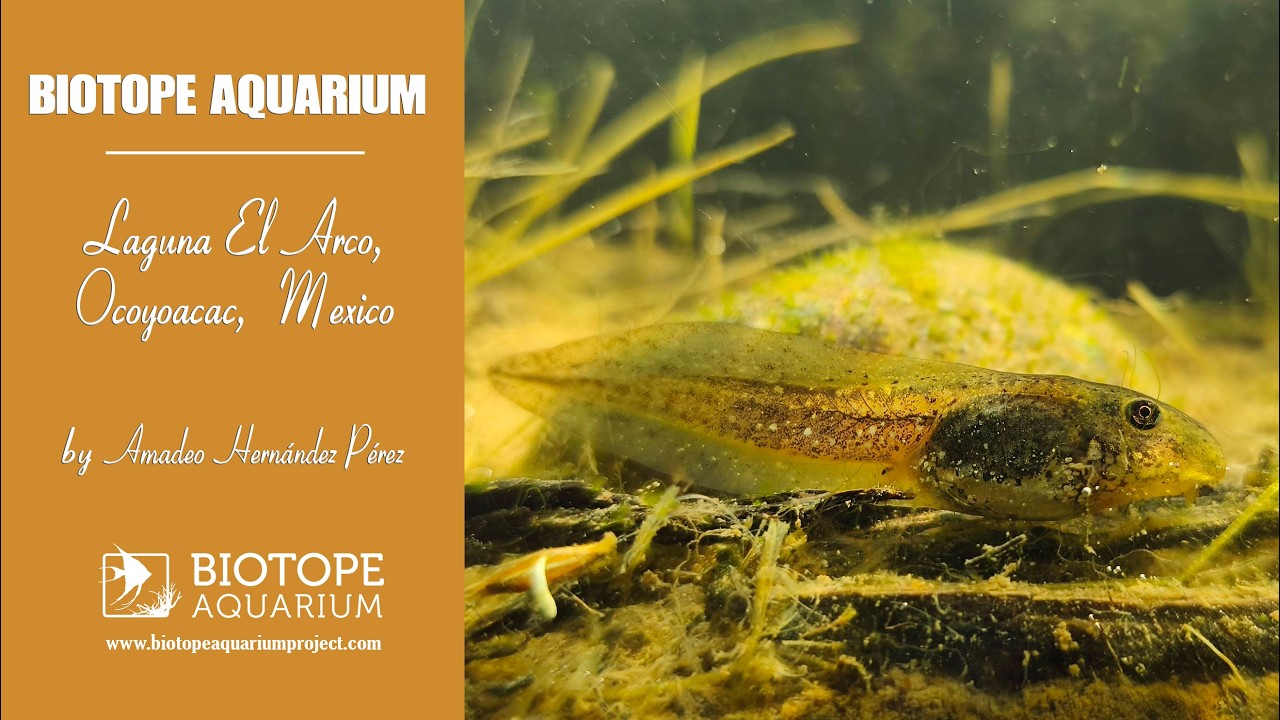
The main inhabitant represented in this project is the Moctezuma Frog (Lithobates moctezumae) in its larval stage. This amphibian is endemic to Mexico and is listed under NOM-059-SEMARNAT-2025 as a species subject to special protection.

The recreated biotope area is characterised by abundant rooted emergent aquatic vegetation, mainly Eleocharis palustris, which provides shelter for Lithobates moctezumae individuals against human disturbance. The larvae develop primarily on the soft substrate that characterises this habitat.

To faithfully recreate this biotope aquarium, all natural elements were collected responsibly, with the aim of maintaining the ecological characteristics of the original environment.

Submitted by
Amadeo Hernández Pérez
Approved by
Michael Köck & Jairo Arroyave
GPS
19.2982788, -99.3763351
Geographical region
Central America
Drainage Basin
Lerma-Santiago Basin
River catchment
Upper Río Lerma
Water body type
Laguna
Water body name
El Arco
Water body part
Pool
Water body course
Water body: tributary of
Tributary name

Videos above and below water
Water Chemistry

Water information

Water type
Freshwater
Water color
Clear water
Water transparency
High
Concentration of sediments
High
Water temperature
15 °C
Water flow/curent
Slow

Chemical parameters

pH
7.2
Conductivity
GH
3 mg/l
dGH
KH
1 mg/l
dKH
Dissolved Oxygen

Aquarium information

Aquarium description

Set-up date
November, 2025
Aquarium decoration

For a faithful recreation of this biotope aquarium, all natural elements were responsibly collected to preserve the ecological characteristics of the original habitat.

Fauna:

  • Lithobates moctezumae (Ranidae)
  • Girardinichthys multiradiatus (Goodeidae)
  • Cambarellus montezumae (Cambaridae)
  • Physa sp. (Physidae)

Aquatic vegetation:

  • Eleocharis palustris (Cyperaceae)
  • Lemna minor (Araceae)
  • Azolla sp. (Salviniaceae)
Aquarium equipment

Filtration:
Internal filter with a flow rate of 650 L/h (Aqua-Krill).

Lighting:
Three white fluorescent bulbs, each rated at 8 W and 6500 K. The aquarium receives approximately 3 hours of direct sunlight exposure, complemented by an artificial lighting photoperiod of 5 hours.

Fish care

The inhabitants are fed twice daily. In the mornings, they receive TetraPro Tropical Crisps food. Additionally, live food (Daphnia sp.) is provided three times per week.

The larvae of Lithobates moctezumae and the specimens of Cambarellus montezumae are fed with a balanced diet from the brand “El Pedregal”.

Plant care

The plants have low requirements and do not need special care. With the established photoperiod, they grow well and remain healthy. The most damaged parts are pruned weekly to maintain plant condition and aquarium balance.

Water care

Every weekend, a thorough maintenance routine is carried out, including filter cleaning, glass cleaning, substrate siphoning, pruning of damaged plant parts, and a 25% water change.

Dimensions

Length
100 cm
Depth
40 cm
High
40 cm
Volume
160 L

Substrate in aquarium

Sand
Beige
Pebble/Gravel
Beige
Stone
Grey
Stone form
Roundish
Silt/Mud
Beige
Leaves
Driftwood
Few
Submerged terrestrial vegetation
Yes

Bibliography


Comment by the expert

Michael Köck: I’m torn. On the one hand, the aquarium is really appealing and totally matches natural conditions. I truly love it. But on the other hand, I can’t really judge how appropriate the stocking is because the number of animals isn’t given, and the long-term viability isn’t there since it’s stocked with tadpoles that will have to leave the aquarium at some point. On top of that, the video footage isn’t very informative. Altogether, that unfortunately prevents a much better result.

Jairo Arroyave: Description of the BIN is thorough and it is accompanied by above water photographs/video. Comparisons between BIN and BAM were mainly informed by the written description of the underwater landscape since no visual support for underwater BIN was provided. Photos and videos of the BAM were modest and having additional footage and photos would have benefited this entry. Still, the BAM appears to rather satisfactorily recreate the BIN, although no fish were observed.