bin
Laguna El Arco, Ocoyoacac, México
Mexico, Estado de México, Ocoyoacac
El Arco Lagoon is located within Miguel Hidalgo y Costilla National Park in Ocoyoacac, State of Mexico. Commonly known as La Marquesa, the park lies on the Mexican Central Plateau, one of the largest high-altitude mountain systems in the world. According to the World Conservation Monitoring Centre (WCMC), this region is one of the world’s most important freshwater conservation areas, encompassing Mexico’s principal highland wetland complex and supporting an exceptional diversity of endemic freshwater fishes, particularly members of the family Goodeidae.
El Arco Lagoon supports natural populations of Girardinichthys multiradiatus, one of the characteristic goodeid species of the region.
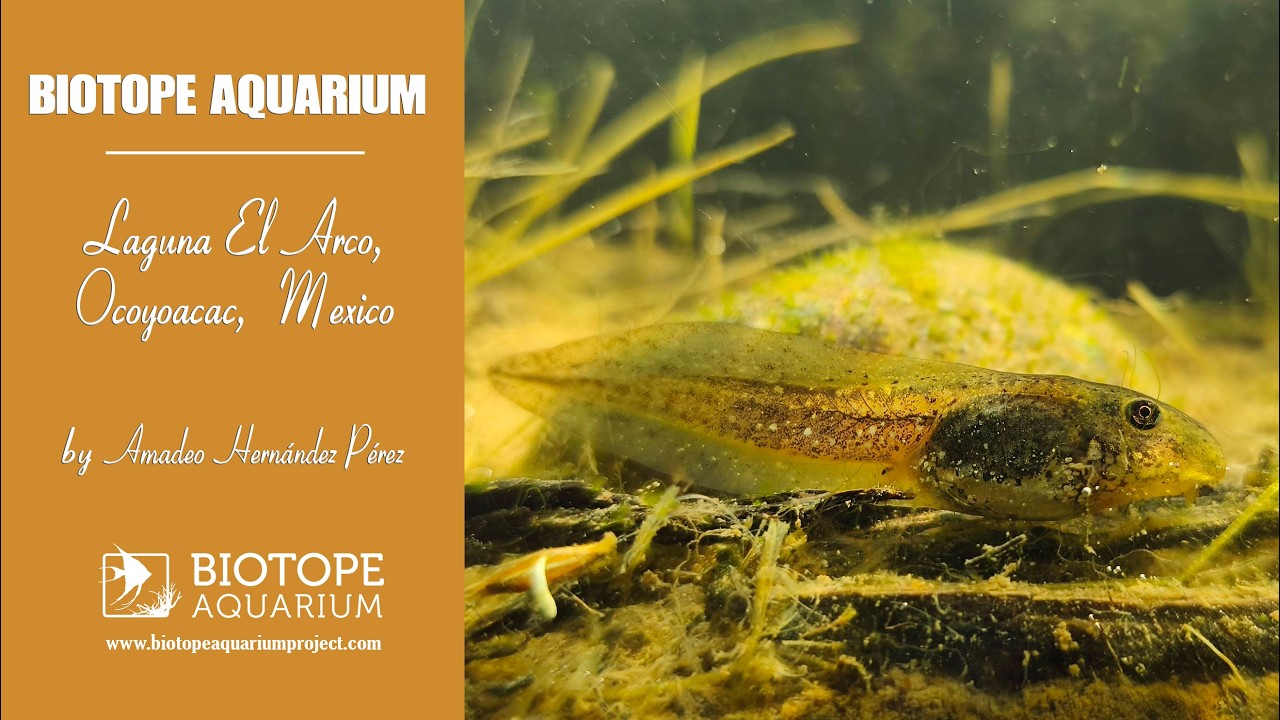
This biotope aquarium recreates the northern littoral zone of El Arco Lagoon and highlights the habitat used by the larvae of the Moctezuma frog, Lithobates moctezumae. Endemic to central Mexico, this amphibian is currently listed under NOM-059-SEMARNAT-2025 as a species subject to special protection, emphasizing the ecological importance of conserving its wetland habitat.
- Submitted by
- Amadeo Hernández Pérez
- Approved by
- Michael Köck & Jairo Arroyave
- GPS
- 19.2982788, -99.3763351
- Geographical region
- Central America
- Drainage Basin
- Lerma-Santiago Basin
- River catchment
- Upper Río Lerma
- Water body type
- Laguna
- Water body name
- El Arco
- Water body part
- Pool
- Water body course
- Water body: tributary of
- Tributary name
Videos above and below water
Warning: Undefined variable $fish_parent in /home/biotopea/public_html/wp-content/themes/bap/content-bin.php on line 55
Water Chemistry
Water information
- Water type
- Freshwater
- Water color
- Clear water
- Water transparency
- High
- Concentration of sediments
- Water temperature
- 15 °C
- Water flow/curent
- None
Chemical parameters
- pH
- 7.0
- Conductivity
- GH
- dGH
- 4 °dGH
- KH
- dKH
- 0
- Dissolved Oxygen
Substrate in nature
- Sand
- Beige
- Pebble/Gravel
- Stone
- Brown
- Stone form
- Roundish
- Silt/Mud
- Beige
- Leaves
- Few
- Driftwood
- Few
- Submerged terrestrial vegetation
- Yes
Aquatic Biotope
- Date of collecting
- 15/10/2025
- Collecting area
- Edge of reservoir
- Water depth
- 0,2m
- Air temperature
- Sunlight
- Full sun
Environment
- Environment
- Human settlements
- Human settlements
- Urban area
- Surrounding area
The lagoon is primarily surrounded by montane coniferous forests dominated by Pinus, Abies, Cupressus, and Juniperus, interspersed with high-altitude grasslands. The surrounding soils are predominantly clay-rich.
The aquatic vegetation is composed mainly of Elodea densa, Hydrocotyle spp., Eleocharis sp., Mimulus sp., Juncus sp., Poa annua, Pennisetum clandestinum, and Typha latifolia.
The avifauna includes aquatic species such as Fulica americana and Egretta sp., together with terrestrial birds including Turdus migratorius, Junco phaeonotus, Passer domesticus, and Quiscalus mexicanus. Reptiles recorded in the area include the lizard Sceloporus grammicus and the Mexican Dusky Rattlesnake (Crotalus triseriatus), which occurs naturally within its distribution range.
The aquatic fauna is characterized by moderately abundant schools of Girardinichthys multiradiatus, which exhibit active foraging and reproductive courtship behaviour. Freshwater snails of the genera Physa and Planorbis are associated with colonies of Elodea densa. The lagoon also supports the freshwater crayfish Cambarellus montezumae, locally known as acocil, as well as two non-native fish species introduced for recreational angling: Oncorhynchus mykiss and Cyprinus carpio. Amphibians are represented by the Moctezuma Frog, Lithobates moctezumae.
Terrestrial vegetation:
- Pinus spp. (Pinaceae)
- Abies spp. (Pinaceae)
- Cupressus spp. (Cupressaceae)
- Juniperus spp. (Cupressaceae)
- Underwater landscape
The lagoon measures approximately 150 m in length and 80 m in width. Around 85% of the water column is densely vegetated, with extensive submerged beds of Egeria densa (formerly classified as Elodea densa). The marginal zone reaches a depth of approximately 50–65 cm and is characterised by exceptionally clear water, allowing easy observation of the behaviour of the Mexcalpique (Girardinichthys multiradiatus) while highlighting the distinctive features of this biotope, including its biotic components (aquatic flora and fauna) and abiotic elements (clay substrate, scattered roots, and very few stones).
The substrate consists predominantly of fine clay. Any significant disturbance easily resuspends the sediment, causing temporary turbidity that clears within several minutes.
Fish:
- Girardinichthys multiradiatus (Goodeidae)
- Oncorhynchus mykiss (Salmonidae)
- Cyprinus carpio (Cyprinidae)
Amphibians:
- Lithobates montezumae (Ranidae)
Crustaceans:
- Cambarellus montezumae (Cambaridae)
Molluscs:
- Physa sp. (Physidae)
- Planorbis sp. (Planorbidae)
Aquatic plants:
- Egeria densa (Hydrocharitaceae)
- Spirogyra sp. (Zygnemataceae)
- Typha latifolia (Typhaceae)
- Juncus sp. (Juncaceae)
- Hydrocotyle sp. (Araliaceae)
- Threats to ecology
The principal threat to El Arco Lagoon is illegal logging in the surrounding forests, combined with insufficient enforcement and habitat management by local authorities. Another major concern is the inadequate management of intensive recreational use, particularly during weekends. Large numbers of visitors leave behind significant amounts of litter, contributing to habitat degradation and pollution.
A further important conservation issue is the introduction of non-native fish species for recreational angling, particularly Oncorhynchus mykiss and Cyprinus carpio. As introduced species, they compete with native fauna for food resources, disrupt ecological interactions, and may negatively affect the population dynamics of endemic species through predation, competition, and habitat alteration.
Illegal logging in the surrounding forests, inadequate habitat management, uncontrolled recreational pressure, litter pollution, and the introduction of non-native fish species (Oncorhynchus mykiss and Cyprinus carpio) represent the main threats to El Arco Lagoon. These introduced species may disrupt ecological balance through competition with native fauna and alteration of natural food webs.
Riparian zone
- Trees near the aquatic habitat
-
Many -
Comment by the expert
Michael Köck: The natural habitat is excellently described. Practically everything relevant is mentioned. From that standpoint, there are no points deducted.
Jairo Arroyave: Description of the BIN is thorough and it is accompanied by above water photographs/video. Comparisons between BIN and BAM were mainly informed by the written description of the underwater landscape since no visual support for underwater BIN was provided. Photos and videos of the BAM were modest and having additional footage and photos would have benefited this entry. Still, the BAM appears to rather satisfactorily recreate the BIN, although notably no fish were observed.