bin
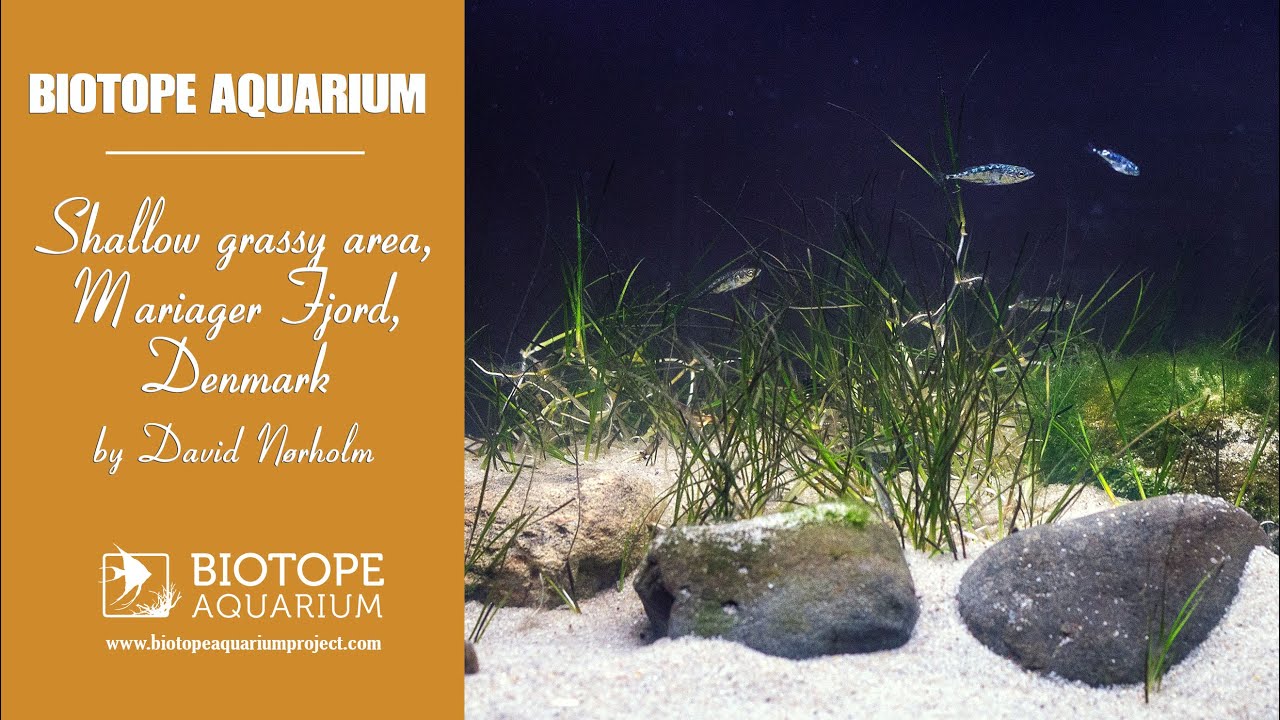
Shallow grassy area, Mariager Fjord, Denmark
Denmark, Nordjylland, Mariagerfjord kommune
Mariager Fjord is the longest fjord, or inlet, in Denmark. It is 35 km long and stretches from Hadsund in the East to Hobro in the West. The water is brackish and connected to Østersøen (a part of the Baltic Sea). The salinity of the water declines as closer to the shore we get.
Mariager Fjord has a variety of habitats, and differs from the low, sandy areas close to the banks of the fjord, to more rocky areas. The depth of the fjord varies from a few centimeters at the lowest areas, close to the shores, to about 30 meters at the deepest.
There are no rivers in Denmark, but there are more than 40 fjords. Mariager Fjord at Mariager, is called “Denmarks most beautiful fjord”.
- Submitted by
- David Nørholm
- Approved by
- Gireg Allain & Aleksey Malyshev
- GPS
- 56.6548271, 9.9866066
- Geographical region
- Northern Europe
- Drainage Basin
- Mariager Fjord
- River catchment
- Mariager Fjord at Mariager
- Water body type
- Stream
- Water body name
- Mariager Fjord
- Water body part
- Delta
- Water body course
- Lower course
- Water body: tributary of
- Stream
- Tributary name
- Mariager Fjord
Videos above and below water
Warning: Undefined variable $fish_parent in /home/biotopea/public_html/wp-content/themes/bap/content-bin.php on line 55
Water Chemistry
Water information
- Water type
- brackish-water
- Water color
- White water
- Water transparency
- Low
- Concentration of sediments
- Medium
- Water temperature
- 24 °C
- Water flow/curent
- Slow
Chemical parameters
- pH
- 7.2
- Conductivity
- GH
- 8 mg/l
- dGH
- KH
- 12 mg/l
- dKH
- Dissolved Oxygen
Substrate in nature
- Sand
- Beige
- Pebble/Gravel
- Mixed
- Stone
- Brown
- Stone form
- Roundish
- Silt/Mud
- Beige
- Leaves
- Few
- Driftwood
- Few
- Submerged terrestrial vegetation
- Yes
Aquatic Biotope
- Date of collecting
- 04/06/2022
- Collecting area
- Shore line
- Water depth
- 0,2m
- Air temperature
- 28 °C
- Sunlight
- Full sun
Environment
- Environment
- Affected by human activity
- Affected by human activity
- Agriculture
- Agriculture
- Advanced
- Surrounding area
Mariager Fjord is a beautiful inlet, but as it is with most other parts of Denmark it’s not wild. Much of the area surrounding the fjord is cultivated by agriculture or human settlement. In some areas of the Fjord, there are farm animals grassing close to the shore.
A lot of the fjord is dominated by forest, and some of the forests are even relatively old. Most of it is dominated by human activity though. The most wild area is perhaps Bramslev Bakker (Bramslev Hills). This area is dominated by old forests, heather, and some “wild” living cows.
- Underwater landscape
The underwater landscape of Mariager Fjord is relatively varying. If one disregards areas dominated by stones, the bottom of the fjord is very silty and plain. The bottom is mostly sand, covered with a thick layer of silt, which is swirled around in the water by the slightest disturbance. Some areas, close to the shore, are dominated by stones. These areas an inhabited by other types of fish than the silty areas.
Close to the shoreline the underwater landscape is dominated by large open areas, with only sand and silt. This is broken only by small islands of plants – mostly Ruppia maritima. In these plant groups of juvenile Gasterosteus aculeatus lives. The open sandy areas are only inhabited by Pomatoschistus microps.
The level of salinity declines as the closer we get to the shoreline. In this habitat the salinity is relatively low.
- Threats to ecology
The biggest threat to Mariager Fjord is by far the recurring oxygen depletion. This is a major problem for the inlet. The problem occurs when the summers become too hot, and without either wind or rain to circulate oxygen into the water. When this happens much of the aquatic life of the fjord dies. Big amounts of fish can be seen drifting around with the belly’s in the fender. This latest major depletion was in 1997.
The depletion of oxygen is a natural phenomenon, but it is reinforced by agricultural emissions of nitrogen into the water.
Furthermore, the fjord is also used for industrial shipping, which is also a problem for aquatic life.
Human activity and settlement close to the fjord is a problem as well.
Riparian zone
- Trees near the aquatic habitat
-
Few -
Comment by the expert
Gireg Allain: The description of the biotope is very interesting because this living environment is very unusual due to the maritime proximity. The ecology is well detailed, as well as the negative impact of human activities on this environment. We can also see the ever-increasing action of global warming on aquatic environments that are highly dependent on oxygen concentration. The underwater images of the biotope are a bit dark, but those of the environment and those taken in aquarium are very beautiful.
Aleksey Malyshev: In the description of the environment I wanted to see more. Nothing is said about wild animals and birds. Their interaction with fish. Not a word about invertebrates.