bam Demanding level

#11199 Orcia River, Castiglione d’Orcia, Siena, Tuscany, Italy

Sponsored by

Italy, Siena, Castiglione d'Orcia

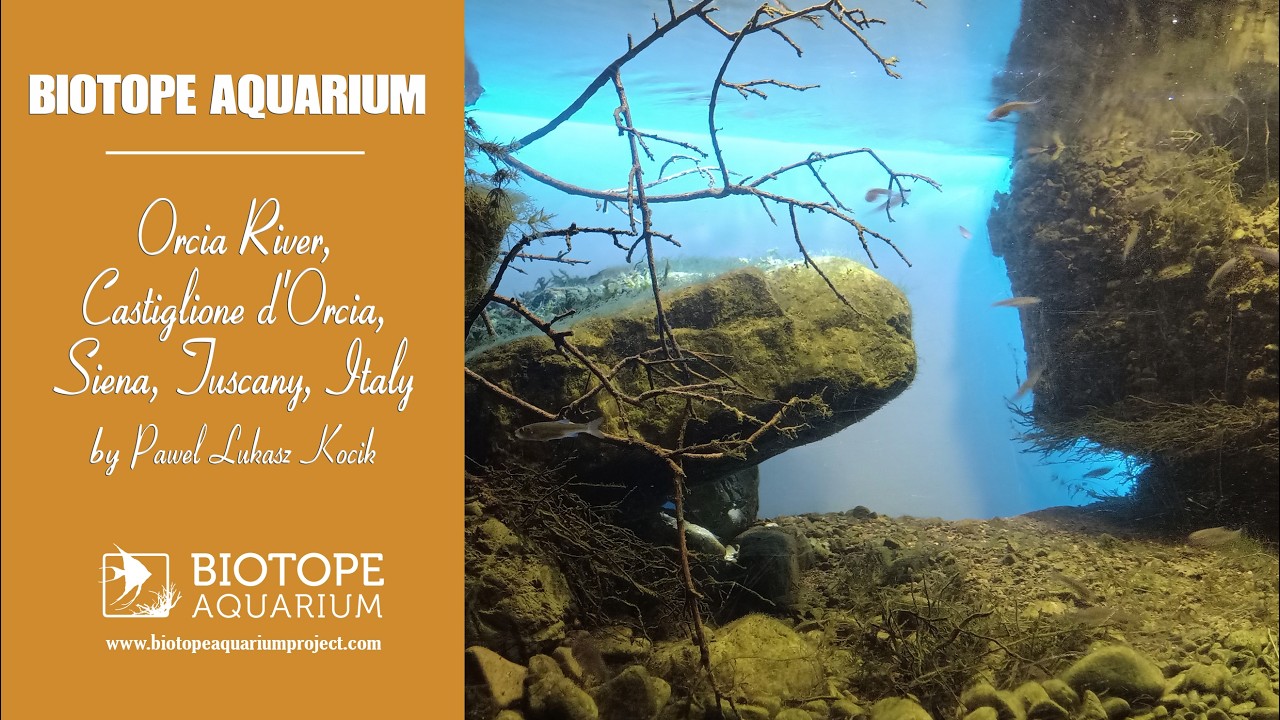
This aquarium is a faithful reproduction of the Orcia River ecosystem in its Tuscan hillside stretch, right at the foot of Castiglione d’Orcia. The choice stems from a desire to recreate a unique Mediterranean river environment, characterized by strong seasonal variations, and to showcase our local biodiversity, which is often overshadowed by classic tropical biotopes.

The layout is inspired by the striking limestone gorges of the Val d’Orcia. The substrate consists of a mix of fine sand and rounded river pebbles of various sizes, arranged to simulate the force of the water current. Smooth, water-worn driftwood pieces complete the hardscape.

The most interesting feature is the dynamism of the setup: intense lighting stimulates the growth of an algal biofilm on the rocks, which is essential for grazing bentic fauna, while a well-directed current keeps the water highly oxygenated. A true fragment of wild, fascinating Tuscany, enclosed within a tank.

Submitted by
Pawel Lukasz Kocik
GPS
43.0296097, 11.6211939
Geographical region
Southern Europe
Drainage Basin
Tyrrhenian Sea
River catchment
Ombrone River basin
Water body type
River
Water body name
Orcia
Water body part
Pool
Water body course
Headwaters
Water body: tributary of
River
Tributary name
Ombrone

Videos above and below water


Warning: Undefined variable $fish_parent in /home/biotopea/public_html/wp-content/themes/bap/content-bam.php on line 85

Water Chemistry

Water information

Water type
Freshwater
Water color
Black water
Water transparency
High
Concentration of sediments
Low
Water temperature
24 °C
Water flow/curent
Strong

Chemical parameters

pH
7.5
Conductivity
GH
dGH
14 °dGH
KH
dKH
6 °dKH
Dissolved Oxygen

Aquarium information

Aquarium description

Set-up date
3 February, 2026
Aquarium decoration

To faithfully recreate the wild landscape of the Castiglione d’Orcia gorges, this aquarium was designed according to strict ecological and hydrodynamic principles, avoiding purely decorative composition. Each element was positioned according to a fundamental question: How would this structure naturally form under the influence of water flow and geological processes?

Rocky hardscape (limestone gorge):
Only limestone and sedimentary rocks with the warm grey tones characteristic of the Castiglione d’Orcia cliffs were selected. The layout represents a realistic cross-section of the river environment.

A large rock formation dominates the left side of the aquarium, simulating a cliff face shaped by erosion and seasonal flood events. On the right side, the arrangement gradually rises to recreate a natural riverbank or sloping margin. The central area represents the active stream channel, forming an open flow corridor that crosses the aquarium vertically and creates deep crevices and sheltered zones for benthic organisms.

This structure reflects the natural interaction between geology, current dynamics, and habitat formation observed in the Orcia River gorge ecosystem.

Aquarium equipment

Filtration: DIY 20 L internal filter system combined with aquaponic filtration.

Fish care

The Orcia River represents a highly oxygenated freshwater environment, and many of its native fish species are rheophilic, adapted to life in flowing water. To replicate these natural conditions and encourage appropriate behaviour, strong and continuous water movement is maintained throughout the aquarium.

The return pump flow is periodically adjusted, and the outlets are regularly cleaned to ensure efficient circulation. This creates a constantly moving, oxygen-rich environment that promotes active swimming behaviour and supports the physiological condition and muscle development of flow-adapted fish.

Fish:

  • Alburnus arborella (Leuciscidae) – 17
  • Padogobius nigricans (Oxudercidae) – 3

Crustacean:

  • Atyaephyra desmarestii (Atyidae) – 6

Mollusc:

  • Radix balthica (Lymnaeidae) – 20
Plant care

I only prune the roots of the plants in the aquaponics system.

Aquatic plant:

  • Ceratophyllum demersum (Ceratophyllaceae) – 10

Aquatic moss:

  • Fontinalis antipyretica (Fontinalaceae) – 10

Wetland plants:

  • Mentha aquatica (Lamiaceae) – 20
  • Phragmites australis (Poaceae) – 20
Water care

Maintaining the minimum water level and topping up evaporated water when necessary.

Dimensions

Length
120 cm
Depth
60 cm
High
50 cm
Volume
360 L

Substrate in aquarium

Sand
Grey
Pebble/Gravel
Grey
Stone
Grey
Stone form
Irregular
Silt/Mud
None
Leaves
Few
Driftwood
Few
Submerged terrestrial vegetation
Yes