- Environment
- Untouched
- Surrounding area
The Orcia River biotope, particularly along the stretches influenced by calcareous thermal springs such as those near Bagno Vignoni, represents a highly diverse freshwater ecosystem where geological, hydrological, and biological processes are closely interconnected.
The riparian zone is dominated by extensive stands of common reed (Phragmites australis) and broadleaf cattail (Typha latifolia). This dense emergent vegetation stabilises the riverbanks during periods of high flow, reduces erosion, and creates cool, humid microhabitats along the water’s edge.
The marginal zone supports a rich assemblage of semi-aquatic plants, including water mint (Mentha aquatica), brooklime (Veronica anagallis-aquatica), and watercress (Nasturtium officinale). These species contribute to habitat complexity, provide shelter for aquatic invertebrates, and support a wide range of ecological interactions.
The reed beds serve as important nesting, feeding, and refuge areas for numerous wetland birds, including the grey heron (Ardea cinerea) and the common moorhen (Gallinula chloropus). The river margins and sun-exposed limestone outcrops also provide habitat for native reptiles, notably the dice snake (Natrix tessellata), a non-venomous aquatic species that forages primarily on small fish.
Together, the riparian vegetation, thermal influences, and calcareous substrates create a structurally complex ecosystem of considerable ecological value within the Orcia River basin.
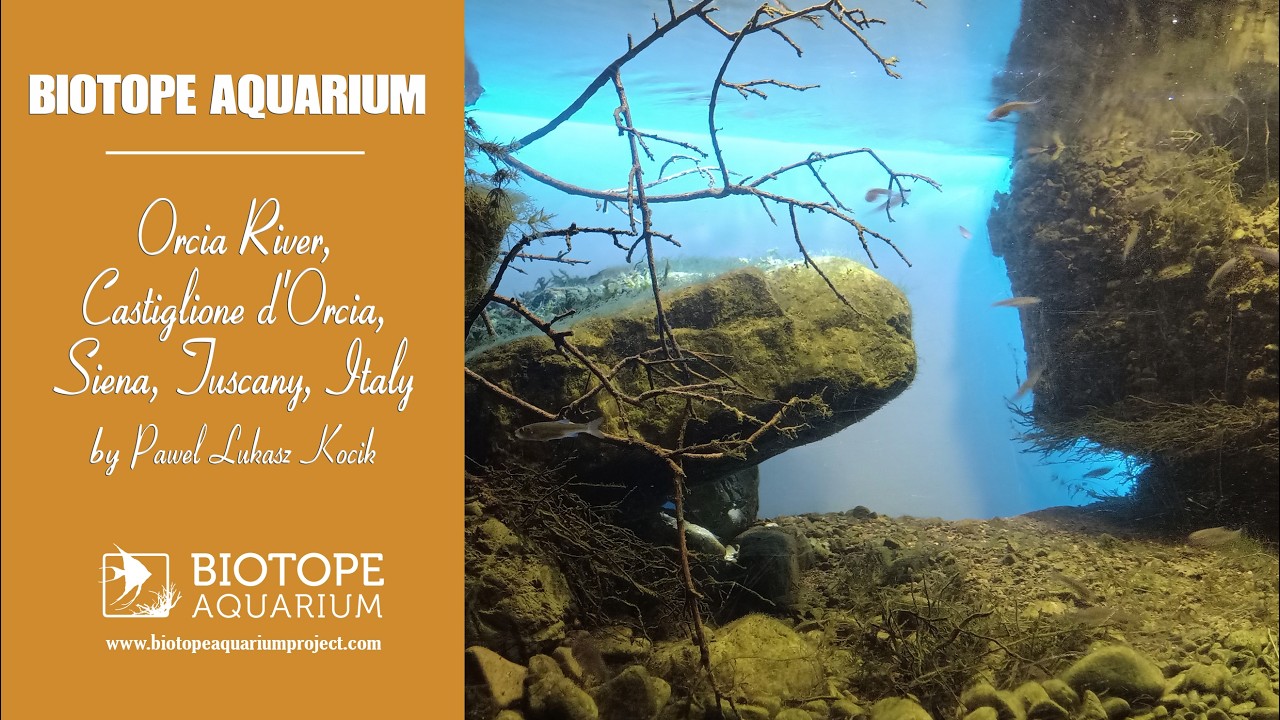
- Underwater landscape
In sections with moderate to strong current, Stuckenia pectinata (syn. Potamogeton pectinatus) forms long, ribbon-like leaves that move freely with the flow, minimizing hydraulic resistance. In slower or deeper areas, Ceratophyllum demersum develops dense submerged stands, while Fontinalis antipyretica colonises travertine rocks, forming extensive dark-green mats. Along sandy margins, Alisma plantago-aquatica establishes submerged ribbon-like leaves that further increase habitat complexity.
This diverse aquatic vegetation provides essential habitat for native freshwater fauna. Dense mats of Fontinalis antipyretica and the root systems of Mentha aquatica support abundant populations of freshwater shrimps, including Atyaephyra desmarestii and Palaemonetes antennarius, which graze continuously on periphyton and bacterial biofilms.
The submerged vegetation and marginal plant communities also provide shelter for benthic fish species such as the Arno goby (Padogobius nigricans) and the Italian spined loach (Cobitis bilineata). Areas of reduced current offer nursery habitat for juvenile Italian vairone (Telestes muticellus), while the riverbanks and adjacent shallow waters are frequented by the non-venomous dice snake (Natrix tessellata).
Together, the interaction between travertine substrates, aquatic vegetation, thermal influences, and flowing water creates a structurally complex habitat that supports a diverse assemblage of native freshwater species.
Fish
Alburnus arborella (Leuciscidae) – 200
Padogobius nigricans (Oxudercidae) – 50
Cobitis bilineata (Cobitidae) – 3
Reptile
Natrix tessellata (Natricidae) – 2
Crustaceans
Atyaephyra desmarestii (Atyidae) – 5
Palaemonetes antennarius (Palaemonidae) – 3
Potamon fluviatile (Potamidae) – 1
Aquatic plants
Stuckenia pectinata (Potamogetonaceae) – 50
Helosciadium nodiflorum (Apiaceae) – 5
Ceratophyllum demersum (Ceratophyllaceae) – 30
Aquatic moss
Fontinalis antipyretica (Fontinalaceae) – 50
Wetland plants
Mentha aquatica (Lamiaceae) – 30
Phragmites australis (Poaceae) – 100
- Threats to ecology
The ecological balance of the Orcia River is increasingly threatened by a combination of climate change and human activities.
Climate change has intensified summer droughts across central Italy, reducing water availability in rivers with naturally torrential regimes such as the Orcia. During prolonged dry periods, water flow may decline dramatically, leaving isolated pools with elevated temperatures and reduced dissolved oxygen concentrations. Under these conditions, oxygen-dependent organisms, including Fontinalis antipyretica and sensitive fish species such as Padogobius nigricans, are particularly vulnerable.
Agricultural runoff represents another major pressure on the ecosystem. The Val d’Orcia is characterised by extensive agricultural land, and nutrients derived from fertilisers, particularly nitrates and phosphates, are transported into the river during rainfall events. Although aquatic vegetation, including Ceratophyllum demersum and Phragmites australis, provides an important natural filtration function, excessive nutrient inputs promote eutrophication, favouring the proliferation of filamentous algae that can overgrow aquatic mosses and slower-growing submerged plants, ultimately reducing habitat quality and biodiversity.
The introduction of non-native species further threatens the native freshwater community. The invasive Louisiana crayfish (Procambarus clarkii) damages submerged vegetation, disturbs the substrate, and competes directly with native decapods such as Palaemonetes antennarius. Introduced predatory fish, including species released for recreational angling, may also reduce populations of native fish through predation on juveniles and smaller species.
Water abstraction for agricultural purposes poses an additional conservation concern. Excessive withdrawal of surface water or groundwater can reduce the minimum ecological flow required to sustain the river ecosystem, accelerating the degradation of shallow wetlands and marginal habitats dominated by Typha and Phragmites. Maintaining adequate environmental flows is therefore essential for preserving the ecological integrity of the Orcia River thermal biotope.