bam Beginner-friendly level

#11189 Třeboradice Stream, Prague, Czechia

Sponsored by

Czech Republic, Prague, Březiněves

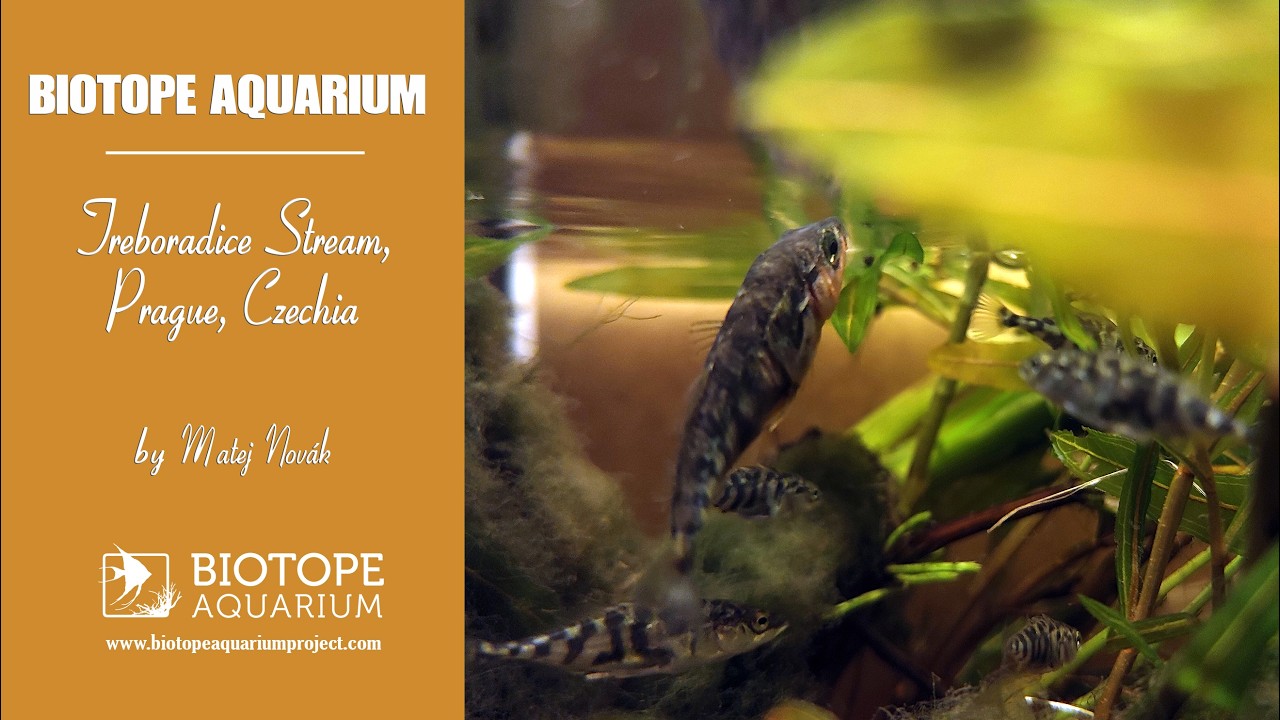
This shallow 22-litre aquarium is inspired by the Třeboradice Stream, a small watercourse with a muddy, clay-rich substrate. Its margins are densely vegetated with wetland plants, while in summer the channel becomes overgrown with curly pondweed (Potamogeton crispus) and mats of filamentous green algae. Among the remains of dead grass stems, Three-spined Sticklebacks (Gasterosteus aculeatus) of all sizes dart through the water.

A powerful hang-on filter recreates the steady current in which these fish naturally live, forage, and display their characteristic behaviour.

Submitted by
Matěj Novák
GPS
50.1639252, 14.4900494
Geographical region
Eastern Europe
Drainage Basin
Elbe River
River catchment
Mratín Stream
Water body type
Stream
Water body name
Třeboradice
Water body part
Water body course
Water body: tributary of
Tributary name

Videos above and below water

Warning: Undefined variable $fish_parent in /home/biotopea/public_html/wp-content/themes/bap/content-bam.php on line 85

Water Chemistry

Water information

Water type
Freshwater
Water color
Clear water
Water transparency
Medium
Concentration of sediments
High
Water temperature
25 °C
Water flow/curent
Strong

Chemical parameters

pH
7.3
Conductivity
714
GH
205 mg/l
dGH
KH
137 mg/l
dKH
Dissolved Oxygen

Aquarium information

Aquarium description

Set-up date
June, 2026
Aquarium decoration

During the stream survey, most of the materials used to establish this aquarium were collected directly from the habitat, including plants, animals, water, and substrate. Using fine sieves, clay and fine gravel were separated from the stream sediment, which was then rinsed several times before being introduced into the aquarium together with river sand to form the substrate base.

Aquatic and marginal plants were carefully collected and replanted in areas containing clay-rich substrate from the original habitat. After the sediments settled, a hang-on filter and an air pump were installed to provide water circulation and additional oxygenation.

Most of the aquarium water was taken directly from the stream and supplemented with aged tap water. This method was used to reduce sudden changes in water chemistry and minimise stress on the collected organisms.

The grey, clay-rich substrate, combined with scattered remains of dead grass stems, provides shelter and feeding areas for fish and invertebrates. The open-water zones bordered by algal mats and curly pondweed (Potamogeton crispus) recreate the narrow, meandering channels that develop within the stream during summer. The shallow dimensions of the aquarium also reflect the water depth of the natural habitat where these organisms were observed.

Fish:

  • Gasterosteus aculeatus (Gasterosteidae) – 12

Amphibian:

  • Rana temporaria (tadpole) (Ranidae)

Crustacean:

  • Gammarus pulex (Gammaridae)

Molluscs:

  • Lymnaea stagnalis (Lymnaeidae)
  • Galba truncatula (Lymnaeidae)

Aquatic plants:

  • Potamogeton crispus (Potamogetonaceae)
  • Cladophora glomerata (Cladophorophyceae)
  • Equisetum palustre (Equisetaceae)
  • Ranunculus aquatilis (Ranunculaceae)
Aquarium equipment

Filtration: PULACO Aquarium Hang-on Filter (66 GPH, 3W)
Lighting: Sunsun ADE 600 C Series Top Light
Aeration: Invital piezo air pump with air stone

Fish care

The aquarium closely replicates the natural habitat and ecological requirements of its inhabitants. Three-spined Sticklebacks (Gasterosteus aculeatus), which are often cautious and wary in the wild, move freely throughout the aquarium without showing signs of stress or excessive hiding. Sheltered areas are primarily used during interactions with larger individuals or territorial disputes.

Accumulations of submerged vegetation provide important foraging areas and suitable nesting material, reflecting the species’ characteristic breeding behaviour. Because the aquarium houses wild-caught fish and invertebrates, live foods such as brine shrimp nauplii and Daphnia are offered regularly. The sticklebacks also readily accept frozen foods, including mosquito larvae, making them easy to maintain while still supporting a natural feeding regime.

Plant care

The plants maintained in the aquarium require relatively little care. Curly pondweed (Potamogeton crispus), like most aquatic plants, depends on an adequate supply of nutrients and light for healthy growth. These requirements are provided by the nutrient-rich substrate and the relatively strong lighting installed above the aquarium.

To preserve the plant’s characteristic submerged appearance, continuous water movement is essential. Under stagnant conditions, the leaves often begin to grow above the water surface and gradually change shape, a phenomenon commonly observed in many aquatic and wetland plants capable of both submerged and emergent growth.

Water care

Water changes were carried out frequently during the beginning of the summer holidays. This was done both to gradually acclimate the fish to tap water and to counteract the effects of high summer temperatures, which occasionally caused the aquarium water temperature to rise. Regular water changes helped maintain stable conditions and ensured a healthy environment for the fish and other aquatic organisms.

Dimensions

Length
60 cm
Depth
25 cm
High
15 cm
Volume
23 L

Substrate in aquarium

Sand
Grey
Pebble/Gravel
Black
Stone
None
Stone form
Silt/Mud
Grey
Leaves
Few
Driftwood
None
Submerged terrestrial vegetation
Yes