bin
Třeboradice Stream, Prague, Czechia
Czech Republic, Prague, Březiněves
Třeboradice Stream is a shallow watercourse originating in Březiněves, in northern Prague, Czech Republic, where it flows through agricultural fields. Despite being strongly influenced by human activities, the stream provides an important freshwater habitat for a variety of aquatic and terrestrial wildlife.
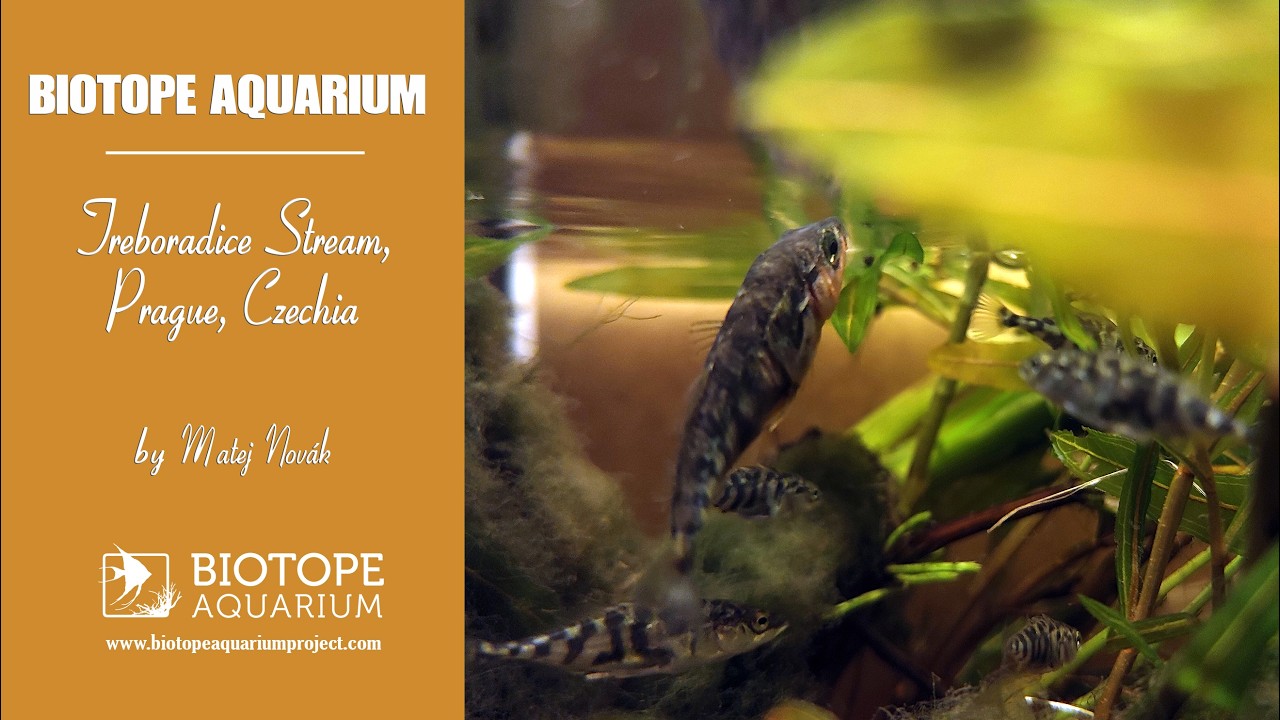
I selected this biotope because of the presence of the non-native Three-spined Stickleback (Gasterosteus aculeatus), which was introduced into Czech waters during the 20th century, most likely through aquarium releases. This small, resilient fish is now well established and represents the only fish species commonly found in the upper reaches of the stream.
- Submitted by
- Matěj Novák
- Approved by
- Markku Varjo, Francesco Denitto & Alexey Malyshev
- GPS
- 50.1639252, 14.4900494
- Geographical region
- Eastern Europe
- Drainage Basin
- Elbe River
- River catchment
- Mratín Stream
- Water body type
- Stream
- Water body name
- Třeboradice
- Water body part
- Water body course
- Water body: tributary of
- Tributary name
Videos above and below water
Warning: Undefined variable $fish_parent in /home/biotopea/public_html/wp-content/themes/bap/content-bin.php on line 55
Water Chemistry
Water information
- Water type
- Freshwater
- Water color
- Clear water
- Water transparency
- Medium
- Concentration of sediments
- High
- Water temperature
- 24 °C
- Water flow/curent
- Strong
Chemical parameters
- pH
- 7.5
- Conductivity
- 730
- GH
- 230 mg/l
- dGH
- KH
- 130 mg/l
- dKH
- Dissolved Oxygen
Substrate in nature
- Sand
- Grey
- Pebble/Gravel
- None
- Stone
- None
- Stone form
- Silt/Mud
- Grey
- Leaves
- Few
- Driftwood
- None
- Submerged terrestrial vegetation
- Yes
Aquatic Biotope
- Date of collecting
- 22/06/2026
- Collecting area
- Shore line
- Water depth
- 0,2m
- Air temperature
- 32 °C
- Sunlight
- Full sun
Environment
- Environment
- Affected by human activity
- Affected by human activity
- Agriculture
- Agriculture
- Massive
- Surrounding area
The Třeboradice Stream originates from Pokorňák Pond in Březiněves, on the northern edge of Prague. From there, it flows through agricultural fields before joining the Mratín Stream in Třeboradice.
Surrounded by poppy and rapeseed fields, this narrow stream forms an oasis for countless invertebrates, numerous bird species, and semi-aquatic mammals. For honey bees from nearby apiaries, mats of filamentous algae along the stream margins provide a safe and convenient source of water.
Among the taller vegetation, orb-weaver spiders (Araneidae) and long-jawed orb-weavers (Tetragnathidae) build their impressive webs. The colourful wings of dragonflies, damselflies, and butterflies further enliven the scene.
In spring, the stream flows swiftly, and only a few aquatic and riparian plants have begun to develop. During summer, the current slows, and the narrow channel becomes filled with dense vegetation and thriving aquatic life. In autumn, withering cattails and reeds collapse into the water, forming natural barriers that partially dam the stream and fill much of the channel with accumulated plant material.
- Underwater landscape
Throughout its entire length, the stream rarely exceeds one metre in width or half a metre in depth. Along most sections, however, it is only about 50 centimetres wide and remains very shallow. Although the water flows at a relatively fast pace, the limited depth allows it to warm considerably during the warmer months.
The streambed is composed primarily of mud and fine sand. Its eroding banks are covered by a dense tangle of grasses and wetland vegetation that overhangs the water, providing shelter for a variety of aquatic organisms.
During summer, when plant growth reaches its peak, the channel becomes increasingly structured by dense stands of curly pondweed (Potamogeton crispus) and thick mats of green algae. These vegetation beds create narrow, meandering passages within the stream. In these channels, the Three-spined Stickleback (Gasterosteus aculeatus), the only fish species known from this stream, occurs in large numbers.
Beneath the water’s surface, a rich assemblage of aquatic invertebrates can be found, including freshwater amphipods, backswimmers (Notonecta spp.), water scorpions (Nepa cinerea), and the larvae of dragonflies and damselflies (Odonata), mayflies (Ephemeroptera), and caddisflies (Trichoptera).
Signs of mammalian activity are also evident along the stream, where burrows of nutria (Myocastor coypus) and voles are frequently found along the banks.
Fish:
- Gasterosteus aculeatus (Gasterosteidae)
Amphibian:
- Rana temporaria (Ranidae)
Crustaceans:
- Gammarus pulex (Gammaridae)
- Asellus aquaticus (Asellidae)
Molluscs:
- Lymnaea stagnalis (Lymnaeidae)
- Galba truncatula (Lymnaeidae)
- Pisidium amnicum (Sphaeriidae)
Aquatic plants:
- Potamogeton crispus (Potamogetonaceae)
- Equisetum palustre (Equisetaceae)
- Ranunculus aquatilis (Ranunculaceae)
- Cladophora glomerata (Cladophorophyceae)
Wetland plants:
- Typha angustifolia (Typhaceae)
- Urtica kioviensis (Urticaceae)
- Juncus conglomeratus (Juncaceae)
- Lycopus europaeus (Lamiaceae)
- Veronica beccabunga (Plantaginaceae)
- Cirsium palustre (Asteraceae)
Terrestrial vegetation:
- Crataegus monogyna (Rosaceae)
- Threats to ecology
As mentioned previously, although the stream is neither large nor extensive, it has a significant impact on the wildlife inhabiting the surrounding area. Pollution of the water or alterations to the stream’s natural course caused by human activities could affect a large number of species that depend on it for food, shelter, breeding sites, and access to water.
Several potential threats are located in close proximity to the stream, including agricultural fields, a wastewater treatment plant, and a major highway. Agricultural runoff may introduce excess nutrients and chemicals into the water, while infrastructure and urban development can alter natural hydrological processes and reduce habitat quality.
In addition, human negligence contributes to physical pollution in the form of litter, packaging materials, and plastic waste. Such debris can degrade habitats, harm wildlife, and reduce the ecological value of the stream and its surroundings.
Together, these pressures pose a risk to this fragile ecosystem. Without adequate protection and responsible management, they have the potential to cause long-term or even irreversible damage to the biodiversity and ecological functions supported by the stream.
Riparian zone
- Trees near the aquatic habitat
-
Few -
Comment by the expert
Markku Varjo: It is great that the participant wanted to present an example of a sensitive brook system whose biota has been changed by the impact of an alien fish species introduced by human and eutrophication caused by surrounding agricultural areas.
Francesco Denitto: The BIN is certainly not a particularly distinctive or attractive watercourse in the eyes of an observer. However, the author has sought to highlight the serious problem of human impact on this fragile ecosystem. The introduction of an alien species by humans has most likely disrupted the original balance of the biotope in question. Special appreciation goes to the author who, by entering the competition, has sought to raise readers’ awareness of the existence of this biotope and the risks associated with urbanisation in its surroundings.