bin
Indawgyi Lake, Kachin State, Myanmar
Myanmar, Kachin State, Mo-Thyin Township
Indawgyi Lake is the largest natural lake in Myanmar which covers a total area of 260km². It is located in Mo-Thyin Township, Myitkyina District, Kachin State in North Myanmar. The Lake is 23.8km long, and the maximum width is around 10km. Lake is a quite deep and it can reach the 22m depth but during the rainy season the lake’s water level can rise 5-10m.
The lake is covered with dense vegetation and has a rich flora and fauna. The Lake is home to over 450 species of birds, 93 species of freshwater fishes including 2 endemic and 6 new to science. In recent years, the lake and its watershed forest was recognized as an important Nature conservation area.
- Submitted by
- Klementina Keresztes-André
- Approved by
- Heok Hee Ng & Greg Martin
- GPS
- 25.1514244, 96.3337402
- Geographical region
- Southeastern Asia
- Drainage Basin
- Irrawaddy River Basin
- River catchment
- Nanyinkha Chaung
- Water body type
- Lake
- Water body name
- Indawgyi Lake
- Water body part
- Pool
- Water body course
- Water body: tributary of
- Tributary name
Videos above and below water
Warning: Undefined variable $fish_parent in /home/biotopea/public_html/wp-content/themes/bap/content-bin.php on line 55
Water Chemistry
Water information
- Water type
- fresh-water
- Water color
- Clear water
- Water transparency
- Medium
- Concentration of sediments
- Medium
- Water temperature
- 21-31 °C
- Water flow/curent
- Slow
Chemical parameters
- pH
- 7.0
- Conductivity
- GH
- 7 mg/l
- dGH
- KH
- dKH
- Dissolved Oxygen
- 60 %
Substrate in nature
- Sand
- Grey
- Pebble/Gravel
- Grey
- Stone
- Grey
- Stone form
- Silt/Mud
- Brown
- Leaves
- Few
- Driftwood
- Few
- Submerged terrestrial vegetation
- Yes
Aquatic Biotope
- Date of collecting
- Collecting area
- Water depth
- Air temperature
- Sunlight
Environment
- Environment
- Human settlements
- Human settlements
- Dispersed
- Surrounding area
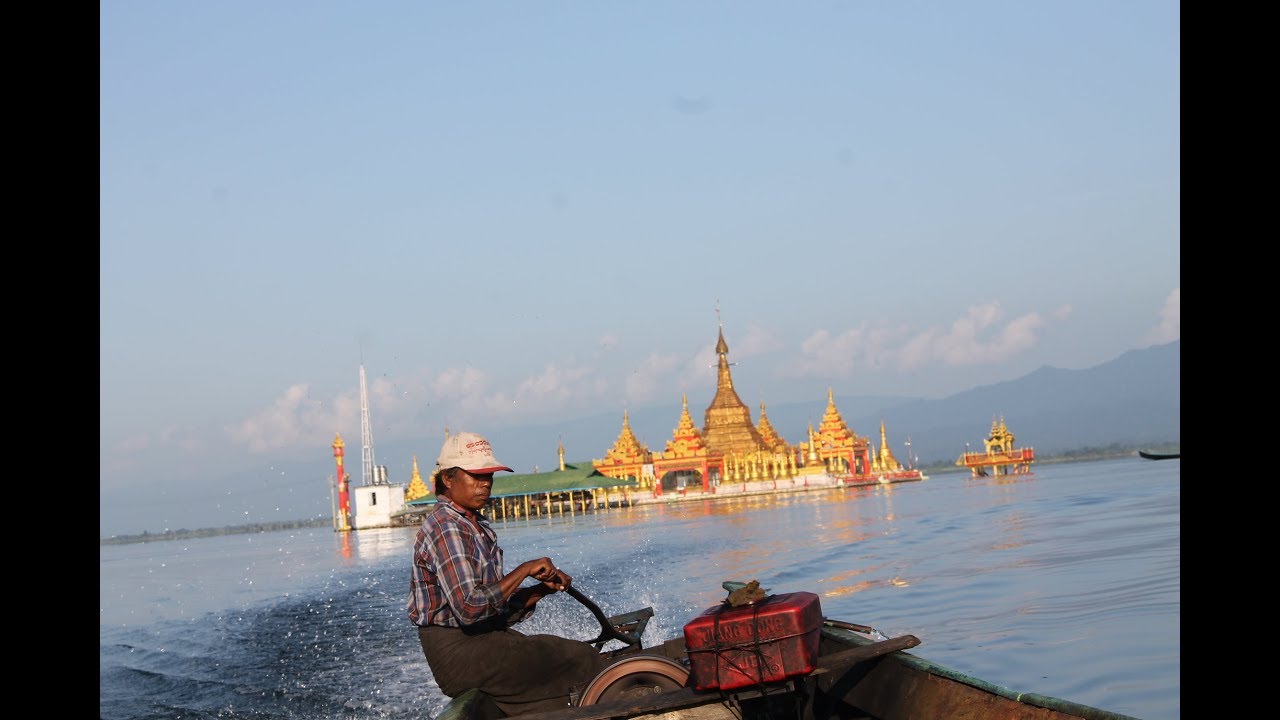
Located on an area of 260 km2, the Indawgyi Lake is surrounded by mountains with a height of 1.180m. The mountains are covered in a mix of subtropical forest at higher elevations with a canopy up to 40m. There are more than 20 villages around the Lake and the houses were built farther from the shore and stand on wooden piles due to flooding. The most striking attraction of the Lake is the Shwe Myintzu Pagoda that attracts many tourists.
Indawgyi Lake Wildlife Sanctuary established in 1999, after that more and more international and non-governmental organizations became involved in the Lake’s life. A nature conservation program works in the area of the lake that consists of nine areas like Sustainable Fishing, Community Forestry, Environmental Education and Community-Based Ecotourism. Thanks to this program, local inhabitants can no longer make a living only from fishing.
- Underwater landscape
The bed of the lake has got different depths, the bottom is typically clayey with rich submerges macrophytes, like Vallisneria spiralis, Ceratophyllum demersum and Najas indica. The surface of the Lake is covered with islands of floating plants for example Salvinia cucullata, Pistia stratiotes and Eichornia crassipes which is an invasive species.
There is also abundant riparian vegetation along the coast, especially in the floodplain areas. In addition, numerous species of green algae can be found in the lake. The leaves and branches of trees and bushes along the lake fall into the water and provide a great hiding place for smaller fish like Dario hysginon, Indostomus paradoxus or Parasphaerichthys ocellatus.
This rich habitat is home to more than 90 fish species, and at least two endemic fish species like Indostomus paradoxus and contains one endemic turtle Nilssonia formosa.
Fishes:
- Notopterus notopterus (Notopteridae)
- Gudusia variegata (Clupeidae)
- Amblypharyngodon atkinsonii (Cyprinidae)
- Bangana devdevi (Cyprinidae)
- Danio albolineatus (Cyprinidae)
- Danio kyathit (Cyprinidae)
- Esomus danrica (Cyprinidae)
- Labeo boga (Cyprinidae)
- Opsarius barnoides (Cyprinidae)
- Pethia didi (Cyprinidae)
- Pethia erythromycter (Cyprinidae)
- Rasbora daniconius (Cyprinidae)
- Acantopsis spectabilis (Cobitidae)
- Lepidocephalichthys berdmorei (Cobitidae)
- Lepidocephalichthys eleios (Cobitidae)
- Hemibagrus microphthalmus (Bagridae)
- Mystus cineraceus (Bagridae)
- Sperata acicularis (Bagridae)
- Pterocryptis berdmorei (Siluridae)
- Wallago attu (Siluridae)
- Pseudolaguvia tuberculata (Sisoridae)
- Hara filamentosa (Erethistidae)
- Indostomus paradoxus (Indostomidae)
- Mastacembelus pantherinus (Mastacembelidae)
- Channa gachua (Channidae)
- Channa marulius (Channidae)
- Channa striata (Channidae)
- Leiodon cutcutia (Tetraodontidae)
- Cirrhinus cirrhosus (Cyprinidae)
- Labeo angra (Cyprinidae)
- Raiamas guttatus (Cyprinidae)
- Badis corycaeus (Badidae)
- Dario hysginon (Badidae)
- Anabas testudineus (Anabantidae)
- Akysis prashadi (Akysidae)
- Bagarius bagarius (Sisoridae)
- Trichopodus trichopterus (Osphronemidae)
- Macrognathus aureus (Mastacembelidae)
Aquatic plants:
- Ceratophyllum demersum (Ceratophyllaceae)
- Hydrilla verticillata (Hydrocharitaceae)
- Najas indica (Hydrocharitaceae)
- Najas minor (Hydrocharitaceae)
- Potamogeton wrightii (Potamogetonaceae)
- Potamogeton nodosus (Potamogetonaceae)
- Utricularia aurea (Lentibulariaceae)
- Utricularia gibba (Lentibulariaceae)
- Vallisneria spiralis (Hydrocharitaceae)
- Euryale ferox (Nymphaeaceae)
- Nymphaea pubescens (Nymphaeaceae)
- Nymphoides indica (Menyanthaceae)
- Nymphoides hydrophylla (Menyanthaceae)
- Ottelia alismoides (Hydrocharitaceae)
- Trapa natans (Lythraceae)
- Azolla pinnata (Salviniaceae)
- Eichornia crassipes (Pontederiaceae)
- Hydrocharis dubia (Hydrocharitaceae)
- Lemna minor (Araceae)
- Pistia stratiotes (Araceae)
- Salvinia cucullata (Salviniaceae)
- Spirodela polyrhizza (Araceae)
- Threats to ecology
This Lake is one of the largest lakes in Asia, and it contains three Critically Endangered (CR) and two Endangered (EN) bird species, like Gyps bengalensis and Gyps tenuirostris. It is home to more than 90 species of water birds and 37 species of mammals.
The biggest problem is that the migrants whoes settled down in the 1990s do commercial fishing which is endanger the livelihood of indigenous people, the species of fish and the survival of water birds. They often use illegal methods like fishing during the closed season and electric fishing. This threat has been largely addressed through a public awareness campaign and the introduction of community managed fishing free zones.
The other big problem is gold mining in the area, which does not take place directly along the Lake, but along the rivers that flow into the lake. Due to hydraulic mines, mercury and sediment rate rise in the lake which delivered by the rivers that flow into the lake. This leads to a deterioration of water quality that could endanger the whole ecosystem of Indawgyi Lake. The nature conservation program also wants to find a solution to this problem by providing an environmentally friendly way of living for the locals like sustainable farming and ecotourism.
Riparian zone
- Trees near the aquatic habitat
-
- Tectona grandis (Lamiaceae)
- Trees near the aquatic habitat
-
- Hopea odorata (Dipterocarpaceae)
- Trees near the aquatic habitat
-
- Dipterocarpus alatus (Dipterocarpaceae)
- Trees near the aquatic habitat
-
- Terminalia tomentosa (Combretaceae)
- Trees near the aquatic habitat
-
- Michelia champaca (Magnoliaceae)
- Trees near the aquatic habitat
-
- Gmelina arborea (Lamiaceae)
Comment by the expert
Heok Hee Ng: Habitat description is detailed and threats are correctly identified.
Greg Martin: Very thorough.